

The AUTEL M/D50 diaphragm kit is a replacement component for compatible AUTEL pulse valves used in industrial dust collection systems. The diaphragm plays an essential role in controlling the main compressed-air flow, allowing the pulse valve to release a short burst of air for cleaning filter bags or cartridges.
During normal operation, the diaphragm moves repeatedly as the pulse valve opens and closes. Because dust collection systems can operate for long periods with frequent cleaning cycles, the diaphragm is exposed to continuous mechanical movement and pressure changes. Over time, normal wear, moisture, contamination, unsuitable operating conditions, or excessive pulse frequency can affect its sealing and response.
Replacing a worn diaphragm can restore the operation of a pulse valve when the valve body and other major components remain in good condition. However, the correct replacement must be matched to the installed valve configuration rather than selected only by nominal valve size.
This guide explains how to identify an AUTEL M/D50 diaphragm kit, recognize common diaphragm problems, select suitable replacement components, and carry out basic maintenance.
What Is an AUTEL M/D50 Diaphragm Kit?

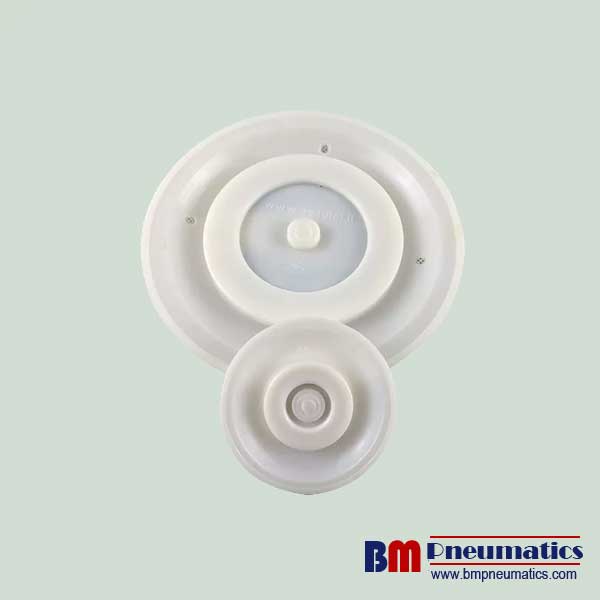
An AUTEL M/D50 diaphragm kit is a replacement component set used to maintain compatible AUTEL diaphragm pulse valves. Its primary function is to restore the diaphragm and associated sealing performance when the original component becomes worn or damaged.
A diaphragm pulse valve operates through a pressure difference created by the pilot system. When the valve receives a cleaning signal, the diaphragm moves away from its sealing position, allowing compressed air to pass rapidly through the main valve opening. Once the pulse ends, the diaphragm returns to its closed position.
This operating cycle is repeated throughout the service life of the dust collector. Consequently, the diaphragm is considered a wear component and should be inspected when valve performance begins to deteriorate.
Why Is the M/D50 Diaphragm Important?
The diaphragm directly affects the pulse valve’s ability to open and close correctly. If it becomes damaged or loses its flexibility, the valve may not produce the required cleaning pulse or may fail to seal after the pulse.
A properly functioning diaphragm helps provide:
- Fast valve response
- Reliable sealing
- Consistent pulse cleaning
- Controlled compressed-air consumption
- Stable dust collector operation
Conversely, a leaking or poorly responding diaphragm can increase compressed-air consumption and reduce the effectiveness of filter cleaning.
For this reason, diaphragm condition should be considered during routine pulse valve maintenance.
How to Identify an AUTEL M/D50 Diaphragm Kit
Correct identification is the most important step before ordering a replacement.
Although M/D50 is a specific diaphragm reference, the reference should be checked against the complete valve model and configuration.
Check the Valve Model
The valve model can usually be found on the valve body, nameplate, product documentation, or previous maintenance records.
Record the complete model rather than only the nominal port size. This provides a much more reliable basis for compatibility checking.
Confirm the Existing Diaphragm Reference
If the original diaphragm is still available, check whether it is marked or identified as M/D50.
The original component can also be measured and compared with the replacement specification when necessary.
Check the Valve Configuration
Two pulse valves can have similar external dimensions while using different internal components. Therefore, the valve model, diaphragm reference, and internal configuration should be considered together.
Provide Photos When Identification Is Uncertain
If the valve model cannot be identified, photographs can be useful. A clear photograph of the complete valve, nameplate, connection, and original diaphragm can help the supplier determine the appropriate replacement.
What Causes an AUTEL M/D50 Diaphragm to Fail?
Diaphragm failure is usually related to a combination of operating conditions rather than a single factor.
Common causes include:
- Repeated mechanical cycling
- Excessive pulse frequency
- Moisture in compressed air
- Oil contamination
- Dust contamination
- Excessive temperature
- Chemical exposure
- Incorrect operating pressure
- Incorrect installation
- Damaged sealing surfaces
If a new M/D50 diaphragm fails soon after installation, replacing it again without investigating the operating conditions may not solve the problem.
The compressed-air system, pilot valve, valve seat, and pulse controller should also be inspected.
Common Symptoms of M/D50 Diaphragm Failure
A deteriorating diaphragm can produce several noticeable symptoms.
Continuous Air Leakage
Continuous compressed-air leakage after the cleaning pulse is a common indication of a sealing problem.
The diaphragm may no longer contact the valve seat correctly, allowing compressed air to pass through the valve even when the pulse signal has ended.
However, contamination, valve-seat damage, and pilot-system problems can produce similar symptoms, so the entire valve should be inspected before determining the cause.
Weak Pulse Cleaning
If the diaphragm does not open fully, the pulse valve may release less compressed air than expected.
As a result, dust may not be removed effectively from the filter element, which can contribute to higher differential pressure across the filter.
Valve Fails to Close
A damaged or deformed diaphragm may remain partially open after the cleaning cycle.
This can result in continuous air consumption and abnormal operating noise.
Increased Compressed-Air Consumption
A leaking pulse valve consumes compressed air outside the intended cleaning cycle. When multiple valves develop leakage, the total effect can become significant for the plant’s compressed-air system.
Unstable Valve Operation
A diaphragm that has become stiff or deformed may respond inconsistently to the pilot signal. Some pulses may appear normal while others are delayed or weaker than expected.
AUTEL M/D50 Diaphragm Material Selection
The appropriate diaphragm material depends on the operating environment.
Before selecting a replacement, consider:
- Operating temperature
- Compressed-air quality
- Moisture exposure
- Chemical environment
- Pulse frequency
- Dust characteristics
- Operating pressure
A diaphragm material that performs well in a standard dust collection application may not be appropriate for a high-temperature or chemically aggressive environment.
TPE
TPE is used in selected industrial diaphragm applications because of its flexibility and suitability for repeated movement.
Its actual suitability depends on the operating temperature and environmental conditions.
NBR
NBR is commonly used for industrial sealing applications and can be suitable for many general-purpose dust collection systems.
However, the operating temperature and chemical environment should be checked before selecting NBR.
EPDM
EPDM can be considered for applications where resistance to moisture, weathering, and certain chemicals is important.
The material should be selected according to the actual application conditions.
FKM
FKM may be appropriate for applications requiring higher temperature or chemical resistance.
It should be selected based on actual operating requirements rather than simply assuming that a higher-specification material is always better.
AUTEL M/D50 Diaphragm Kit vs. Complete Repair Kit
A maintenance technician may replace only the M/D50 diaphragm or use a complete AUTEL Pulse Valve Repair Kit, depending on the condition of the valve.
Replacing only the diaphragm may be appropriate when the valve body, valve seat, spring, and pilot system remain in good condition.
A complete repair kit may be more suitable when multiple internal components show wear or when the valve has been operating for a long period without internal maintenance.
However, a repair kit cannot correct severe damage to the valve body or sealing surface. If the main valve components are damaged, replacing the complete pulse valve may be more economical and reliable.
How to Replace an AUTEL M/D50 Diaphragm
The exact maintenance procedure depends on the specific valve design. The following steps provide general guidance.
Step 1: Shut Off the Air Supply
Isolate the compressed-air supply and release all pressure from the valve before disassembly.
If the valve is controlled by an electrical pulse system, the control circuit should also be isolated to prevent accidental activation.
Step 2: Remove the Valve Cover
Remove the retaining components and carefully take off the valve cover.
Keep the internal components organized during disassembly so they can be returned to their correct positions.
Step 3: Remove the Existing Diaphragm
Remove the old diaphragm and inspect its condition.
Look for cracks, tears, hardening, deformation, worn sealing edges, or other unusual damage.
The failure pattern can provide useful information about the operating environment.
Step 4: Inspect the Valve Seat
The valve seat should be checked before installing the replacement diaphragm.
Remove any dust or foreign material and inspect the sealing surface for scratches, deformation, or other damage.
Step 5: Clean the Internal Components
Clean the internal components and sealing surfaces as required.
Particular attention should be paid to the area where the diaphragm contacts the valve seat because even a small particle can cause leakage.
Step 6: Install the M/D50 Diaphragm
Install the replacement diaphragm in the correct orientation.
Ensure that it sits evenly on the sealing surface and is not twisted, folded, or damaged during assembly.
Step 7: Reassemble the Valve
Reinstall the spring, cover, and retaining components.
Fasteners should be tightened evenly to avoid uneven loading on the diaphragm and valve cover.
Step 8: Test the Valve
Restore compressed-air pressure gradually and activate the valve.
Check that the valve opens correctly, produces a consistent pulse, and closes completely after the pulse.
The valve should also be checked for continuous leakage and abnormal noise.
Why Does a New M/D50 Diaphragm Leak?
A newly installed diaphragm that leaks immediately does not necessarily indicate a defective replacement component.
Several other factors should be investigated.
Incorrect Installation
The diaphragm may have been installed in the wrong orientation or may have been twisted during assembly.
Check the diaphragm position and sealing edge carefully.
Incorrect Replacement Part
A visually similar diaphragm may not have the same dimensions or internal configuration.
Confirm the complete valve model and M/D50 reference before installation.
Contamination
Dust, oil, or other particles on the sealing surface can prevent the diaphragm from closing completely.
Clean the valve seat and surrounding components before assembly.
Damaged Valve Seat
A scratched or deformed valve seat can cause leakage even when the diaphragm is new.
If leakage continues after replacement, inspect the valve body and sealing surface.
Pilot-System Problems
The pilot valve controls the pressure difference that moves the diaphragm.
A malfunctioning pilot system can cause the main diaphragm to remain open or operate incorrectly.
Why Is the M/D50 Pulse Weak?
If the pulse remains weak after diaphragm replacement, inspect the entire operating system rather than replacing the diaphragm repeatedly.
First, check compressed-air pressure and available air volume at the valve inlet. Restricted piping, insufficient air supply, or excessive pressure drop can reduce pulse performance.
The pilot valve and solenoid should also be checked because an incomplete pilot signal may prevent the diaphragm from opening fully.
Other possible causes include:
- Incorrect pulse controller settings
- Contaminated pilot passage
- Incorrect diaphragm installation
- Restricted air piping
- Damaged internal valve components
Compressed-Air Quality and M/D50 Diaphragm Service Life
Compressed-air quality has a significant effect on pulse valve reliability.
Moisture can accumulate in compressed-air piping, while oil and solid particles can enter the pulse valve. These contaminants may affect the diaphragm and other internal components.
A suitable filtration and drainage system can help reduce contamination.
If several M/D50 diaphragms fail prematurely, the compressed-air system should be inspected before assuming that the replacement diaphragms are the problem.
How to Extend M/D50 Diaphragm Service Life
Proper maintenance can reduce unnecessary diaphragm wear and improve pulse valve reliability.
Maintain Clean Compressed Air
Regularly inspect filters, drains, and compressed-air lines to reduce moisture and contamination entering the valve.
Avoid Excessive Pulse Frequency
The pulse cleaning controller should be configured according to actual dust collector requirements.
Unnecessarily frequent pulses increase diaphragm cycling and compressed-air consumption.
Monitor Valve Leakage
Inspect the pulse valves regularly for continuous airflow after the cleaning cycle.
Early detection allows worn components to be replaced before leakage becomes a larger system problem.
Check the Pilot System
The solenoid and pilot valve should be inspected as part of routine maintenance.
A pilot-system problem can cause symptoms that appear to be related to the main diaphragm.
Maintain Spare Parts
For facilities using multiple compatible AUTEL valves, keeping M/D50 diaphragm kits in stock can reduce maintenance delays.
The appropriate spare quantity depends on the number of installed valves, operating conditions, and historical replacement frequency.
When Should an M/D50 Diaphragm Be Replaced?
There is no universal replacement interval for an AUTEL M/D50 diaphragm because service life depends heavily on application conditions.
Relevant factors include:
- Pulse frequency
- Operating pressure
- Operating temperature
- Compressed-air quality
- Dust concentration
- Chemical exposure
- Installation quality
- Equipment operating hours
Instead of replacing the diaphragm solely according to a fixed number of operating hours, maintenance teams should monitor valve performance.
Replacement should be considered when the diaphragm shows visible damage or when the pulse valve develops continuous leakage, weak pulses, unstable operation, or abnormal compressed-air consumption.
Applications of AUTEL M/D50 Diaphragm Kits
Compatible AUTEL pulse valves and their replacement diaphragms can be used in industrial dust collection systems across a range of industries.
Typical applications include:
- Cement manufacturing
- Mining
- Steel production
- Metallurgy
- Building materials
- Power generation
- Chemical processing
- Bulk material handling
- Industrial filtration
The actual diaphragm material and valve configuration should be selected according to the operating environment.
How to Order an AUTEL M/D50 Diaphragm Kit
When requesting an AUTEL M/D50 diaphragm kit, provide detailed information about the installed valve.
Recommended information includes:
- Complete valve model
- Valve series
- Port size
- Existing diaphragm reference
- Material requirement
- Required quantity
- Operating temperature
- Operating pressure
- Application
- Photos of the complete valve
- Photos of the existing diaphragm
If the original part number is unavailable, photographs and measurements can help with identification.
Providing complete information before ordering reduces the risk of receiving an incompatible replacement.
AUTEL M/D50 Diaphragm Kit Supply
BMP Pneumatics supplies pulse valve diaphragms and repair kits for industrial dust collection applications.
For AUTEL M/D50 requirements, customers can provide the complete valve model, existing diaphragm reference, quantity, and operating conditions so that the appropriate replacement can be checked.
If the valve identification is unclear, photographs of the valve, nameplate, and original diaphragm can also be provided for product identification.
The objective is to match the replacement component to the actual installed valve and application rather than relying only on nominal size.
FAQ About AUTEL M/D50 Diaphragm Kits
What is an AUTEL M/D50 diaphragm kit?
An AUTEL M/D50 diaphragm kit is a replacement component set for compatible AUTEL pulse valves. It is used to restore diaphragm sealing and valve operating performance when the original component becomes worn or damaged.
How do I identify an M/D50 diaphragm?
Check the complete AUTEL valve model, existing diaphragm reference, valve size, and internal configuration. If identification is uncertain, provide photographs of the valve and original diaphragm.
Can I replace only the M/D50 diaphragm?
Yes. If the valve body, valve seat, spring, and pilot system are still serviceable, replacing the diaphragm may be sufficient.
Why is my new M/D50 diaphragm leaking?
Possible causes include incorrect installation, contamination, an incompatible replacement diaphragm, valve-seat damage, or pilot-system problems.
How long does an M/D50 diaphragm last?
There is no fixed service life. Pulse frequency, temperature, pressure, compressed-air quality, and application conditions all influence diaphragm durability.
Should I buy an individual diaphragm or a repair kit?
If only the diaphragm is worn and the other components remain in good condition, an individual replacement may be sufficient. If multiple internal components show wear, a complete repair kit may be more appropriate.
How can I order the correct M/D50 diaphragm?
Provide the complete valve model, existing diaphragm reference, quantity, operating conditions, and photographs when available. This information helps verify compatibility before shipment.
Conclusion
The AUTEL M/D50 diaphragm kit is a replacement solution for compatible pulse valves used in industrial dust collection systems. The diaphragm is responsible for controlling the main compressed-air pulse, so its sealing performance directly affects valve reliability and filter cleaning efficiency.
Correct identification is essential because diaphragms with similar dimensions are not necessarily interchangeable. The complete valve model, diaphragm reference, material, and application conditions should be checked before purchasing a replacement.
When the valve body and other major components remain in good condition, replacing the M/D50 diaphragm can restore reliable operation without replacing the complete pulse valve.
Regular inspection, clean compressed air, suitable pulse frequency, and correct installation can further reduce premature diaphragm failure and maintenance downtime.
For AUTEL M/D50 diaphragm kit requirements, contact BMP Pneumatics with your valve model, diaphragm reference, and application details.