

In the intricate world of industrial automation, precise and reliable air control is paramount. Consequently, selecting the right solenoid valve directly impacts system efficiency and uptime. Among the workhorses in this domain is the Goyen RCA3D2, a compact yet robust 3/2-way solenoid valve frequently specified by engineers for diverse pneumatic applications. This article delves into the technical specifications, key benefits, and common uses of this versatile component.
Understanding the 3/2 Function: Core Operation

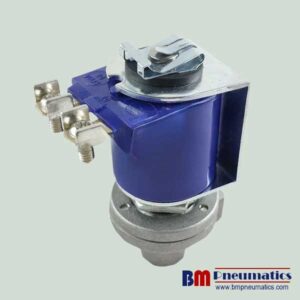
Fundamentally, the “3/2” designation describes the valve’s core functionality. Specifically, it has three ports (Pressure Inlet [P], Outlet [A], and Exhaust [R]) and two switching positions (energized and de-energized). Typically, the RCA3D2 operates as Normally Closed (NC). Therefore:
- De-energized State: Air flows from P to A (closed), and A vents to atmosphere via R (open).
- Energized State: When the solenoid coil receives power, it shifts the internal pneumatic valve mechanism. Immediately, P connects to A (open), and the exhaust port R closes. This direct action allows for precise actuator control.
Technical Specifications & Robust Construction
Engineered for durability and performance, the Goyen RCA3D2 boasts several notable valve specifications:
- Body Material: Primarily brass, offering excellent corrosion resistance and rugged industrial valve suitability for many environments.
- Seals: Nitrile Butadiene Rubber (NBR) is standard, providing reliable sealing for standard compressed air. Viton (FKM) options are often available for higher temperatures or specific media.
- Port Sizes: Commonly available in 1/8″ (NPT or BSPP/BSPT thread types), making it ideal for compact pneumatic systems.
- Pressure Range: Generally operates effectively between 0.15 MPa (approx. 22 psi) and 0.7 MPa (approx. 102 psi), covering a wide array of automation equipment needs.
- Voltage Options: Widely available in common DC (12V, 24V) and AC (110V, 220V) solenoid coil configurations for global integration.
- Flow Rate: Features a Kv value typically around 0.33 (or Cv ~0.38), indicating moderate flow capacity suitable for controlling smaller pneumatic cylinders and actuators.
- Standard Compliance: Often conforms to ISO 15407-1 (modular solenoid valves), ensuring compatibility and interchangeability within standardized systems.
- Power Consumption: Designed for relatively low power consumption, enhancing energy efficiency.
Key Advantages Driving Adoption
The RCA3D2’s popularity stems from several compelling valve benefits:
- Compact Size & Lightweight Design: Its small footprint is a major advantage for space-constrained machinery and modular pneumatic control panels, allowing for high-density installations.
- Reliability & Long Service Life: Goyen’s reputation for quality translates into dependable operation and reduced valve maintenance procedures, minimizing costly downtime.
- Fast Response Times: The efficient solenoid valve design enables rapid switching, crucial for high-cycle applications requiring precise actuator control.
- Low Power Consumption: Available coils, especially DC versions, consume minimal power, contributing to lower operating costs and compatibility with diverse automation control panels.
- Versatility: Suitable for controlling single-acting pneumatic cylinders, small clamps, ejectors, blow-off devices, and as a pilot valve for larger air control valves. Furthermore, its standard mounting pattern facilitates integration onto manifolds.
Target Applications in Modern Automation
Due to its characteristics, the RCA3D2 excels in numerous pneumatic applications:
- Small Machinery Automation: Controlling small actuators in packaging machines, material handling equipment, and assembly stations.
- Process Control Valves: Acting as pilot valves for larger diaphragm or piston-operated valves in process lines.
- Fixture Clamping: Providing reliable air supply and exhaust for single-acting clamps in jigs and fixtures.
- Blow-Off & Cleaning Stations: Directing air for part cleaning, drying, or ejection in manufacturing lines.
- Laboratory Equipment: Used in analytical instruments and automated test stands requiring precise air control.
- Medical Device Pneumatics: Found in smaller medical equipment where compact, reliable valves are essential (ensure material compatibility).
- Low-Cost Automation Projects: A cost-effective solution for prototypes, educational setups, and simpler industrial pneumatic systems.
Installation & Maintenance Best Practices
To maximize performance and lifespan, consider these pneumatic component installation tips:
- Filtration: Always install upstream air filtration (typically 5 microns or finer) to protect internal seals from contamination – a leading cause of failure. This is critical for valve reliability.
- Orientation: While often versatile, mounting the valve in the orientation recommended by the manufacturer optimizes performance and drainage.
- Electrical Connections: Ensure correct voltage is applied to the coil and connections are secure to prevent overheating or erratic operation. Use appropriate suppression if required.
- Environment: Protect from excessive dust, moisture, corrosive atmospheres, or high ambient temperatures beyond its rating. Subsequently, regular visual inspections for leaks and checking coil temperature are prudent valve maintenance procedures.
Troubleshooting Common Issues
| Symptom | Possible Cause | Action |
|---|---|---|
| Valve Doesn’t Shift | No power / Wrong voltage / Coil burnt | Check voltage, wiring, continuity, replace coil |
| Mechanical binding / Contamination | Clean valve, inspect for damage | |
| Insufficient pressure differential | Ensure supply pressure meets minimum spec | |
| Valve Leaking Air | Damaged seals (stem, seat, spool) | Replace seals or entire valve cartridge |
| Contaminant preventing full seal | Clean valve thoroughly | |
| Physical damage to body or seat | Replace valve | |
| Slow Response/Weak | Low supply pressure | Check pressure regulator & supply |
| Restricted flow (kinked tube, filter) | Inspect tubing, filters, fittings | |
| Partially clogged orifice | Clean valve ports and internals | |
| Chattering/Overheating | Voltage too low (AC) / Insufficient current (DC) | Verify correct voltage supply & wiring size |
| Incorrect duty cycle (100% not rated) | Ensure intermittent use or use 100% duty coil | |
| Binding spool | Clean or replace valve |
Conclusion: A Staple for Precision Air Control
Ultimately, the Goyen RCA3D2 3/2 solenoid valve stands as a testament to effective, compact pneumatic design. Its blend of reliability, versatility, and ease of integration makes it a preferred choice for engineers specifying components for industrial pneumatic actuators and automation control panels. Whether controlling a simple clamp or acting as a critical pilot valve, understanding its technical specifications and optimal applications ensures it delivers peak performance within your compressed air system. For demanding environments requiring consistent flow control in a small package, the RCA3D2 remains a highly regarded solution.
More info about Goyen RCA3D2 valve, please visit our official website: www.bmpneumatics.com