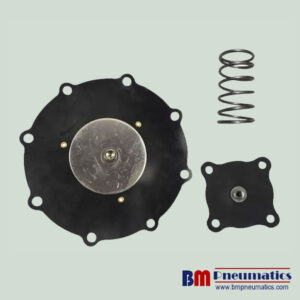
If you run or maintain a dust collector, you already know the compressed air pulse system is the heart of reliable cleaning. When pulse performance drops, filter bags clog faster, differential pressure rises, and energy costs go up. In most cases, the root cause is either a failing pulse jet valve or worn diaphragm components—exactly where diaphragm repair kits can save time and money.
In this article, we’ll explain what a pulse jet valve does, how to spot common failure symptoms, and how to choose the right diaphragm repair kits for quick maintenance—so your dust collector stays stable and efficient.
To browse replacement parts for your system, visit BMP Pneumatics: https://www.bmpneumatics.com/
### What Is a Pulse Jet Valve?
A pulse jet valve is a high-flow, fast-acting valve that releases a short burst of compressed air into the blow tube. That pulse creates a shockwave through the filter bag (or cartridge), dislodging dust cake from the media surface. This “pulse cleaning” keeps airflow consistent and prevents excessive pressure drop.
Most pulse jet valves used in dust collection are diaphragm-type valves, designed to open quickly and close tightly. Because they cycle repeatedly—often thousands of times per day—the diaphragm and related sealing parts are considered wear components.
Key benefits of a well-functioning pulse jet valve:
– Strong, consistent cleaning pulses
– Lower differential pressure across filters
– Longer filter life
– Reduced compressor load and energy consumption
– More stable production uptime
### Pulse Jet Valve vs. Diaphragm Repair Kits: What’s the Difference?
A pulse jet valve is the complete valve assembly (body + pilot + diaphragm system). Diaphragm repair kits are service kits that replace the internal diaphragm and commonly replaced sealing components.
In many maintenance situations, you do not need to replace the entire valve body. If the valve body is in good condition, installing a diaphragm repair kit can restore performance quickly and cost-effectively.
### Common Symptoms of a Failing Pulse Jet Valve
If your dust collector cleaning system is not performing, these are the most common symptoms that indicate a pulse jet valve problem:
1) Weak or inconsistent pulse pressure
You may notice dust not releasing from filters, rising differential pressure, or uneven cleaning across rows. A worn diaphragm can reduce opening speed and peak flow.
2) Air leakage (continuous blowing)
A leaking diaphragm or damaged sealing surface may cause the valve to stay partially open, wasting air and reducing pulse effectiveness.
3) Valve not firing (no pulse)
This could be electrical (solenoid/pilot issues) or mechanical (diaphragm stuck, contamination, damaged spring components depending on design).
4) Increased compressed air consumption
A small leak becomes expensive at scale. Many facilities discover leaks only after compressor run time increases.
5) Faster filter clogging and frequent maintenance
If cleaning pulses are weak, the dust cake becomes harder to remove, leading to shorter filter life and more downtime.
### Why Diaphragm Repair Kits Are a Smart Maintenance Option
Diaphragm repair kits are popular because they address the most common failure point without replacing the entire valve. Benefits include:
– Lower cost than full valve replacement
– Faster turnaround (swap the diaphragm rather than re-piping)
– Restored sealing and pulse performance
– Reduced air loss and operating cost
In practical terms, stocking diaphragm repair kits is a common strategy for plants that cannot afford dust collector downtime.
To explore replacement options, BMP Pneumatics product pages are here: https://www.bmpneumatics.com/
### How to Choose the Right Diaphragm Repair Kits
Selecting the correct diaphragm repair kit is critical for fit, sealing, and performance. Use these steps:
1) Identify your valve series/model and size
Pulse jet valves come in different body sizes (often defined by port size or series). The diaphragm shape and sealing profile must match the valve design.
2) Check the diaphragm material
Common materials include:
– NBR (Nitrile): good general-purpose choice for many dust collection applications
– Other elastomers: may be required for higher temperatures, aggressive environments, or oil exposure
If you’re not sure which material you need, a good rule is: match the existing diaphragm unless your operating conditions have changed.
3) Verify the pilot/solenoid configuration (if applicable)
Some valves use different pilot designs. While the diaphragm kit often remains the main wear part, ensure your valve’s internal layout matches the kit specification.
4) Consider your operating conditions
High cycle rates, unstable air quality (water/oil), and dust contamination can shorten diaphragm life. If you see frequent failures, investigate:
– Air filtration and moisture control
– Correct pulse timing and pressure
– Proper installation torque and alignment
### Replacement Tips (Best Practices)
When installing diaphragm repair kits:
– Depressurize the system completely before disassembly
– Clean internal surfaces carefully—dirt can prevent sealing
– Inspect the valve body sealing surface for scratches or corrosion
– Reassemble evenly to avoid diaphragm distortion
– After installation, test for leaks and confirm pulse strength
If the valve body is cracked, heavily corroded, or the sealing surface is damaged beyond cleanup, replacing the complete pulse jet valve is usually the better choice.
### FAQs: Pulse Jet Valve and Diaphragm Repair Kits
How often should I replace the diaphragm?
It depends on cycle frequency, air quality, and temperature. Many plants replace diaphragms proactively during scheduled maintenance to prevent unplanned downtime.
Can a diaphragm kit fix a valve that won’t pulse at all?
Sometimes. If the diaphragm is torn or stuck, a repair kit can restore operation. If the issue is electrical (solenoid coil, wiring, controller) or pilot blockage, the diaphragm kit alone may not solve it.
What’s the fastest way to reduce compressed air waste?
Check for valves that leak continuously (even slightly). Replacing worn diaphragms is one of the quickest ways to stop air loss.
### Get the Right Pulse Jet Valve Parts for Your System
If you’re maintaining a dust collector and need reliable replacement parts, BMP Pneumatics supplies pulse jet valves and diaphragm repair kits for common pneumatic dust collection applications.
Start here to find the right product and request support:
https://www.bmpneumatics.com/
If you share your valve model/series, port size, and diaphragm type/material, I can rewrite the article to include a tighter “model-to-kit selection” section (which often improves SEO for long-tail searches).