

Introduction
The diaphragm is one of the most important components inside a pulse valve. Although it is a relatively simple part, its performance directly affects the cleaning efficiency, compressed air consumption, and service life of industrial dust collection systems.
In a pulse jet dust collector, the diaphragm controls the rapid opening and closing of the compressed air passage. Every cleaning cycle depends on the diaphragm moving accurately within milliseconds to release a powerful air pulse.
When a diaphragm becomes damaged, hardened, or worn, the pulse valve may experience problems such as air leakage, weak cleaning performance, increased compressed air consumption, or complete valve failure.
Understanding pulse valve diaphragms, including their materials, structures, failure causes, and replacement methods, helps maintenance teams reduce downtime and improve dust collector reliability.
What Is a Pulse Valve Diaphragm?
A pulse valve diaphragm is a flexible sealing component installed inside a diaphragm-type pulse valve.

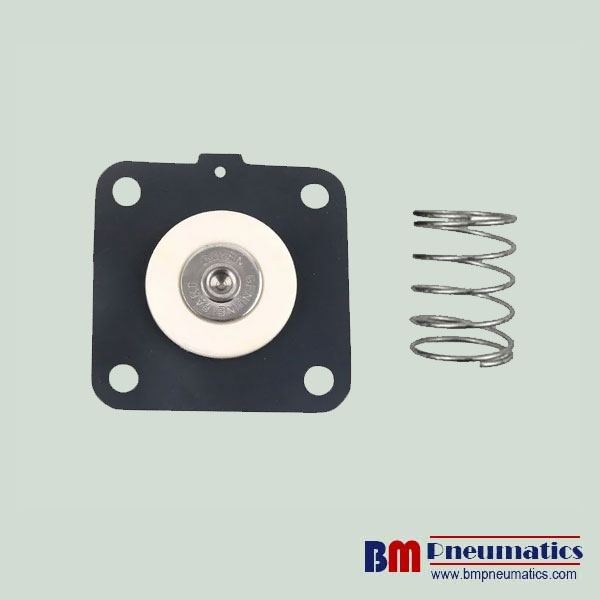
Its main function is to separate the upper and lower pressure chambers inside the valve and control airflow during the opening and closing process.
During normal operation:
- Compressed air fills the valve chamber.
- Pressure keeps the diaphragm closed.
- The pulse controller activates the pilot valve.
- Pressure above the diaphragm is released.
- The diaphragm opens rapidly.
- Compressed air flows through the valve outlet.
After the cleaning pulse finishes, the diaphragm returns to its original position and seals the valve again.
Because this process happens repeatedly, the diaphragm must withstand:
- Continuous pressure changes
- High-frequency movement
- Mechanical stress
- Temperature variations
- Chemical exposure
Why Is the Diaphragm Important in a Pulse Valve?
The performance of a pulse valve depends heavily on diaphragm quality.
A high-quality diaphragm provides:
Fast Response Time
The diaphragm must open and close quickly to create an effective cleaning pulse.
A slow response reduces cleaning efficiency and increases compressed air consumption.
Reliable Sealing
The diaphragm must maintain a tight seal when the valve is closed.
Poor sealing can cause continuous air leakage.
Long Cycle Life
Industrial dust collectors often operate continuously, requiring diaphragms that can withstand hundreds of thousands or even millions of cycles.
Stable Cleaning Performance
A properly functioning diaphragm ensures consistent airflow delivery to filter bags and cartridges.
Types of Pulse Valve Diaphragms
Pulse valve diaphragms can be classified according to design structure and application requirements.
Single Diaphragm
Single diaphragm designs use one main flexible membrane to control airflow.
Advantages include:
- Simple structure
- Easy maintenance
- Lower replacement cost
- Wide application range
They are commonly used in standard industrial dust collectors.
Double Diaphragm
Some high-performance pulse valves use a double diaphragm structure.
Advantages include:
- Faster response
- Improved sealing
- Better durability under demanding conditions
They are often used in larger industrial filtration systems.
Pilot Diaphragm
Some pulse valves include a smaller pilot diaphragm that controls the main diaphragm operation.
Failure of the pilot diaphragm can prevent the main valve from opening correctly.
Common Pulse Valve Diaphragm Materials
Selecting the correct diaphragm material is essential because different industrial environments require different performance characteristics.
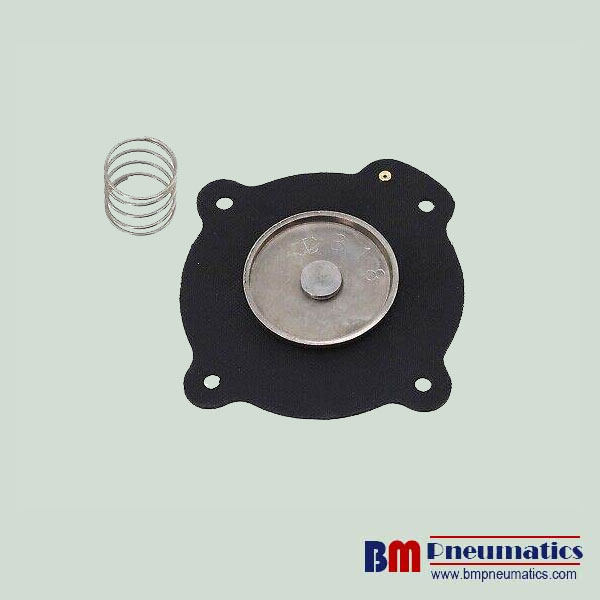
NBR Diaphragm
NBR (Nitrile Butadiene Rubber) is the most commonly used diaphragm material.
Advantages:
- Good mechanical strength
- Good abrasion resistance
- Cost-effective
- Suitable for general industrial applications
Typical applications:
- Cement plants
- Steel factories
- Mining systems
- General dust collectors
NBR is usually the preferred choice for standard operating conditions.
EPDM Diaphragm
EPDM (Ethylene Propylene Diene Monomer) provides better resistance to moisture and weather conditions.
Advantages:
- Excellent water resistance
- Good ozone resistance
- Good outdoor durability
Typical applications:
- Outdoor dust collectors
- Humid environments
- Systems exposed to water vapor
FKM (Viton®) Diaphragm
FKM is designed for demanding environments.
Advantages:
- High temperature resistance
- Excellent chemical resistance
- Long service life in harsh conditions
Typical applications:
- Chemical industries
- High-temperature systems
- Special industrial environments
Silicone Diaphragm
Silicone diaphragms are selected for applications requiring excellent temperature performance and cleanliness.
Typical applications:
- Food processing
- Pharmaceutical industries
- Special sanitary applications
Common Causes of Pulse Valve Diaphragm Failure
Although diaphragms are designed for long service life, several factors can accelerate failure.
Poor Compressed Air Quality
Compressed air containing:
- Water
- Oil
- Dust particles
can damage diaphragm surfaces and reduce flexibility.
Installing proper air filtration and drying systems can significantly improve diaphragm life.
Excessive Operating Pressure
Operating a pulse valve above its recommended pressure range places additional stress on the diaphragm.
This may result in:
- Cracking
- Permanent deformation
- Reduced cycle life
Incorrect Pulse Frequency
Excessive cleaning frequency causes unnecessary diaphragm movement.
This increases mechanical wear and shortens service life.
Chemical Exposure
Certain chemicals can attack rubber materials.
Selecting the correct diaphragm material is essential in chemically aggressive environments.
Temperature Extremes
High or low temperatures can affect diaphragm flexibility and sealing performance.
Always confirm the operating temperature range before selecting a replacement diaphragm.
Signs That a Pulse Valve Diaphragm Needs Replacement
Maintenance teams should inspect diaphragms when the following problems occur.
Continuous Air Leakage
If compressed air leaks continuously from the valve, the diaphragm may no longer seal properly.
Possible causes:
- Cracks
- Wear
- Deformation
- Damaged sealing edge
Weak Dust Cleaning Performance
A damaged diaphragm may not open fully, resulting in insufficient cleaning pressure.
Symptoms include:
- Increased filter pressure drop
- Reduced airflow
- More frequent maintenance
Pulse Valve Does Not Operate
A failed diaphragm can prevent compressed air from being released.
The valve may appear electrically normal but fail mechanically.
Increased Compressed Air Consumption
Air leakage caused by diaphragm failure increases operating costs.
How to Replace a Pulse Valve Diaphragm
Replacing a diaphragm is a common maintenance procedure.
Step 1: Shut Down the System
Before replacement:
- Disconnect electrical power.
- Close compressed air supply.
- Release remaining pressure.
Step 2: Remove the Valve Cover
Remove the valve screws carefully.
Observe the original installation position of:
- Diaphragm
- Spring
- Sealing components
Step 3: Remove the Old Diaphragm
Inspect the damaged diaphragm.
The failure condition can help identify the root cause.
For example:
- Cracks may indicate aging.
- Swelling may indicate chemical attack.
- Hardening may indicate excessive temperature.
Step 4: Install the New Diaphragm
Install the replacement diaphragm correctly.
Ensure:
- Proper alignment
- Correct sealing position
- Clean installation surface
Step 5: Test Valve Operation
After installation:
- Restore air pressure.
- Check for leakage.
- Activate the valve.
- Confirm normal pulse operation.
How to Choose the Right Pulse Valve Diaphragm
Before purchasing a replacement diaphragm, confirm the following information:
Valve Brand
Examples:
- ASCO
- Goyen
- Mecair
- Turbo
- Other OEM pulse valve brands
Valve Model
Different valve models require different diaphragm dimensions.
Valve Size
Confirm:
- Port size
- Valve series
- Installation specifications
Operating Conditions
Consider:
- Temperature
- Humidity
- Chemical exposure
- Working pressure
- Cleaning frequency
Material Selection
Choose:
- NBR for general applications
- EPDM for moisture resistance
- FKM for high temperature or chemicals
- Silicone for special applications
Pulse Valve Diaphragm vs Complete Valve Replacement
Many users must decide whether to replace only the diaphragm or purchase a complete new pulse valve.
Replacing the diaphragm is usually preferred when:
- Valve body is intact
- Pilot assembly works normally
- Only sealing components are worn
A complete valve replacement may be necessary when:
- Valve body is damaged
- Internal passages are corroded
- Multiple components have failed
For most maintenance situations, replacing the diaphragm is the more economical solution.
FAQ
How long does a pulse valve diaphragm last?
The service life depends on operating pressure, compressed air quality, material selection, and working environment. High-quality diaphragms can withstand a large number of operating cycles.
Can different pulse valve diaphragms be used interchangeably?
No. Diaphragms must match the specific valve model, size, and design.
What is the best material for a pulse valve diaphragm?
There is no single best material. NBR is suitable for general applications, while EPDM, FKM, and silicone are selected for specific environments.
How do I know if my diaphragm is damaged?
Common signs include air leakage, weak cleaning pulses, increased air consumption, and unstable valve operation.
Should I replace the whole valve or only the diaphragm?
If the valve body is still in good condition, replacing the diaphragm is usually the most cost-effective option.
Conclusion
The pulse valve diaphragm plays a critical role in maintaining the performance of industrial dust collection systems. A reliable diaphragm ensures fast valve response, effective filter cleaning, and stable operation.
Choosing the correct diaphragm material, monitoring operating conditions, and replacing worn components at the right time can significantly reduce maintenance costs and prevent unexpected downtime.
For industrial users, maintaining compatible pulse valve diaphragms and repair kits is an important part of a preventive maintenance strategy.
By selecting high-quality diaphragm components and following proper replacement procedures, dust collector systems can achieve longer service life and improved cleaning efficiency.