

In industrial production, dust control is directly related to safety, efficiency, and environmental compliance. The pulse-jet cleaning system is the “heart” of most baghouse dust collectors, and the SCG353A047 Pulse Valve is the key component that drives this heart to beat efficiently. This specialized solenoid valve is responsible for generating powerful cleaning pulses and is crucial for maintaining stable system operation.

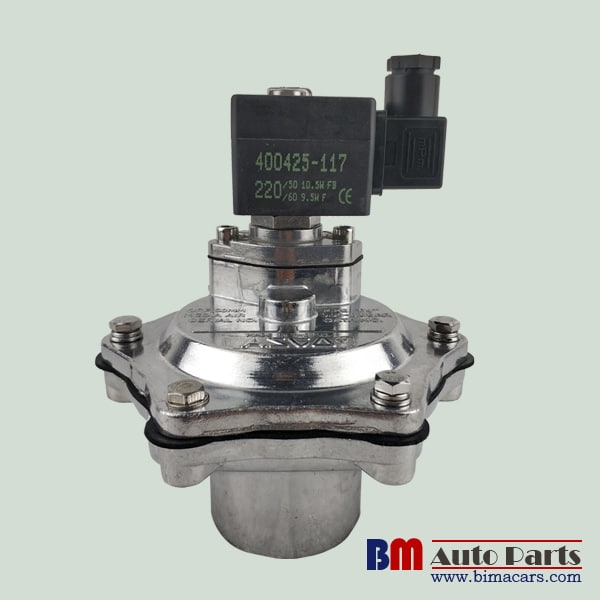
1. How It Works – Simply Put
Think of it as a high-speed, high-pressure “air switch.” Unlike ordinary valves, the SCG353A047 Pulse Valve can open instantaneously, releasing compressed air in a “burst” into the blowpipe. This high-velocity airflow passes through venturi nozzles, creating a strong shockwave that acts directly on the inside of the filter bags, thoroughly dislodging the dust layer built up on the surface.
The core goal of this process is: to restore the permeability of the filter bags, ensuring the dust collector maintains stable airflow and low operating resistance.
2. Why is the SCG353A047 Design Different?
To achieve an “instantaneous burst” effect, this pulse valve has special requirements in its design and performance:
- Extremely Fast Opening/Closing: The valve must respond in milliseconds to produce a sharp shockwave, not a continuous air stream.
- High Flow Capacity: Designed with a high flow coefficient (Cv) to ensure sufficient air volume per pulse.
- Long Service Life: Its core components, like the diaphragm, must withstand millions of cycles – durability is critical.
- Precise Control: The built-in solenoid pilot valve is highly reliable and works in precise coordination with the dust collector’s pulse timer, ensuring the timing and duration of each pulse are accurate.
3. Choosing and Maintaining Your Pulse Valve Correctly Directly Saves You Money
A reliable pulse valve is fundamental to the efficient and low-consumption operation of a dust collector. The opposite leads to double losses:
- Performance Loss: If a valve fails to open, its corresponding filter bag cannot be cleaned, causing a sharp increase in system resistance and poor suction performance.
- Financial Loss: If a valve fails in the open position, compressed air leaks continuously, resulting in significant energy waste and a noticeable rise in electricity costs.
Therefore, choosing a valve like the SCG353A047, made from quality materials and suitable for clean, dry compressed air, is itself an investment in reducing long-term operating costs.
4. Some Practical Maintenance and Troubleshooting Tips
For maintenance personnel, understanding the following points can effectively prevent failures:
- Ensure Air Supply Quality: Moisture and oil in compressed air are the “number one killers” of pulse valves. Always ensure the air is dry and clean.
- Listen and Record: Perform regular inspections. Listen to whether the pulse valves actuate with a crisp, strong sound, and note any abnormalities.
- Set Parameters Appropriately: Based on the dust characteristics, adjust the pulse interval and pulse width (on-time) correctly on the controller. Pulsing too frequently or for too long wastes air; pulsing too briefly leads to incomplete cleaning.
- Spare Parts Planning: For core wearable parts (e.g., diaphragm, coil), maintaining a reasonable inventory is recommended to minimize unexpected downtime.
Conclusion
Although the SCG353A047 Pulse Valve is a small component, it has a significant impact on the overall effectiveness and operating costs of a dust collection system. It precisely balances the relationship between filter bag cleaning efficiency and compressed air consumption. Investing in high-quality pulse valves and implementing proper maintenance not only ensures production safety and continuity but also delivers tangible savings in energy consumption and costs.
For more detailed technical specifications, installation dimensions, or purchasing information regarding the SCG353A047 Pulse Valve, please feel free to visit our official website: www.bmpneumatics.com