

Introduction
A Turbo pulse valve diaphragm kit is a replacement component set designed to restore the sealing and operating performance of a compatible pulse valve used in industrial dust collection systems.
The diaphragm is one of the most frequently replaced wear components in a pulse jet valve. During normal operation, it opens and closes repeatedly as compressed-air pulses are released to clean filter bags or cartridges.
After extended operation, the diaphragm can become hardened, cracked, deformed, or unable to seal correctly. When this happens, the pulse valve may leak compressed air or fail to deliver an effective cleaning pulse.
Replacing the diaphragm can often restore the valve without replacing the complete valve assembly.
For maintenance engineers and industrial buyers, however, choosing the correct Turbo pulse valve diaphragm kit requires more than matching the general valve appearance. Valve model, diaphragm dimensions, material, construction, and compatibility should all be checked before ordering.
This guide explains how Turbo pulse valve diaphragm kits work, when they should be replaced, how to select the correct kit, and how proper maintenance can improve pulse valve performance.
What Is a Turbo Pulse Valve Diaphragm Kit?

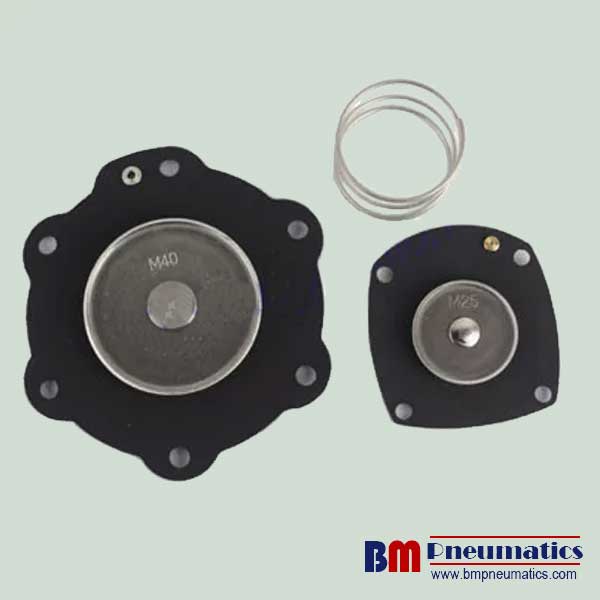
A Turbo pulse valve diaphragm kit is a set of replacement components designed for maintenance of a compatible pulse valve.
The diaphragm is the primary flexible component responsible for controlling the main compressed-air passage inside the valve.
Depending on the specific valve design, a Turbo pulse valve repair kit may include:
- Main diaphragm
- Pilot diaphragm
- O-rings
- Springs
- Seals
- Other internal replacement components
The exact contents vary according to the valve model.
When only internal wear components have deteriorated, replacing them with a suitable diaphragm kit can be more economical than replacing the complete pulse valve.
Why Is the Diaphragm Important?
The diaphragm controls the opening and closing of the main valve passage.
During a cleaning cycle, the diaphragm must move quickly enough to release the required volume of compressed air.
After the pulse, it must return to the closed position and provide a reliable seal.
A damaged diaphragm can therefore affect both:
- Pulse cleaning performance
- Compressed-air consumption
A valve that does not seal correctly may continuously consume compressed air even when no cleaning pulse is being generated.
How Does a Pulse Valve Diaphragm Work?
The diaphragm operates through a pressure differential.
Normal Valve Condition
Compressed air enters the valve and creates pressure in the control chamber.
This pressure helps keep the diaphragm closed.
Pulse Activation
The dust collector controller activates the pilot solenoid.
The pilot mechanism changes the pressure in the control chamber.
Diaphragm Opening
The pressure difference across the diaphragm causes it to move rapidly.
The main valve passage opens.
Compressed-Air Pulse
A large volume of compressed air passes through the valve and enters the blow tube.
The resulting pulse cleans the filter media.
Diaphragm Closing
After the control signal ends, pressure is restored in the control chamber.
The diaphragm returns to its closed position.
The valve is then ready for the next cleaning cycle.
Signs That a Turbo Pulse Valve Diaphragm Needs Replacement
A diaphragm normally requires replacement when its mechanical or sealing performance has deteriorated.
Several symptoms can help identify a problem.
Continuous Air Leakage
One of the most common symptoms is continuous compressed-air leakage.
If the valve does not close correctly after the pulse, the diaphragm may be damaged or improperly seated.
Weak Cleaning Pulse
A damaged diaphragm may not open sufficiently.
This can reduce the volume and intensity of the cleaning pulse.
Increased Compressed-Air Consumption
A leaking pulse valve can increase the workload of the plant’s compressed-air system.
If several valves are leaking simultaneously, the total air consumption can become significant.
Slow Valve Response
A hardened or deformed diaphragm may respond more slowly than a properly functioning component.
Visible Diaphragm Damage
During inspection, look for:
- Cracks
- Tears
- Hardening
- Deformation
- Surface deterioration
- Loss of elasticity
Any significant damage may justify replacement.
Turbo Pulse Valve Diaphragm Kit Compatibility
Compatibility is the most important consideration when purchasing a replacement diaphragm kit.
A diaphragm kit should not be selected only because it looks similar to the original component.
Check the following parameters.
Valve Model
Identify the complete model number of the pulse valve.
This is usually the most reliable starting point.
Diaphragm Dimensions
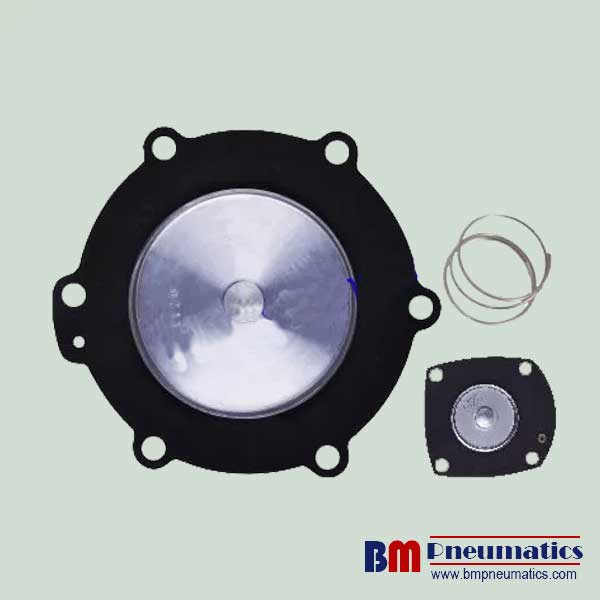
Important dimensions may include:
- Outside diameter
- Center hole diameter
- Overall thickness
- Sealing geometry
Dimensions should be compared with the original component or the manufacturer’s specifications.
Diaphragm Material
Material selection depends on the operating environment.
Common diaphragm materials include:
- NBR
- EPDM
- FKM
The appropriate material depends on temperature, moisture, chemical exposure, and other application conditions.
Diaphragm Construction
Some diaphragms use different reinforcement structures or flexible elements.
The replacement should match the original valve design.
Complete Kit Contents
If the application requires replacement of multiple internal components, verify whether the kit includes:
- Main diaphragm
- Pilot diaphragm
- O-rings
- Springs
- Seals
A kit containing only the main diaphragm may not be equivalent to a complete repair kit.
Turbo Diaphragm Kit Materials
Material selection can have a significant effect on service life.
NBR Diaphragm
NBR is widely used in general industrial applications.
It offers good mechanical properties and is suitable for many standard dust collection systems.
EPDM Diaphragm
EPDM offers good resistance to:
- Moisture
- Ozone
- Weathering
It may be suitable for humid or outdoor operating environments where chemical compatibility is acceptable.
FKM Diaphragm
FKM can be considered for applications requiring improved resistance to elevated temperatures or certain chemicals.
The actual operating environment should always be evaluated before selecting the material.
Turbo Pulse Valve Repair Kit vs Diaphragm Kit
The terms “diaphragm kit” and “repair kit” are sometimes used interchangeably, but the contents may differ.
A diaphragm kit may primarily contain the main diaphragm and related components.
A more comprehensive Turbo pulse valve repair kit may contain additional parts such as pilot components, O-rings, springs, and seals.
Before ordering, confirm exactly what components are included.
This is particularly important for maintenance departments purchasing large quantities.
How to Choose the Correct Turbo Pulse Valve Diaphragm Kit
A structured selection process can reduce compatibility problems.
Step 1: Identify the Existing Valve
Record:
- Manufacturer
- Valve series
- Model number
- Port size
- Configuration
Step 2: Inspect the Existing Diaphragm
If possible, remove the old diaphragm and compare:
- Diameter
- Thickness
- Center opening
- Sealing edge
- Material
- Reinforcement
Step 3: Check the Operating Environment
Record:
- Working temperature
- Compressed-air pressure
- Humidity
- Dust characteristics
- Chemical exposure
Step 4: Select the Appropriate Material
Choose NBR, EPDM, FKM, or another suitable material according to the application.
Step 5: Confirm Kit Contents
Make sure the supplied kit contains all components required for the intended repair.
Step 6: Verify Installation Dimensions
Before ordering multiple kits, verify one sample against the existing valve.
This can reduce the risk of purchasing incompatible components in bulk.
How to Replace a Turbo Pulse Valve Diaphragm
Diaphragm replacement should be carried out by qualified maintenance personnel following the appropriate equipment procedures.
Step 1: Isolate the Valve
Shut off the compressed-air supply.
Release residual pressure from the valve and manifold.
Disconnect electrical power before starting maintenance.
Step 2: Remove the Valve Cover
Remove the retaining fasteners.
Carefully separate the valve cover from the valve body.
Step 3: Remove the Old Components
Remove the old diaphragm and inspect the internal components.
Check for:
- Dust contamination
- Wear
- Corrosion
- Damaged sealing surfaces
Step 4: Clean the Valve
Clean the internal sealing areas carefully.
Foreign particles between the diaphragm and valve seat can cause leakage.
Step 5: Install the New Diaphragm
Install the replacement diaphragm in the correct orientation.
Make sure the sealing edge is properly positioned.
Step 6: Replace Other Kit Components
If the repair kit includes O-rings, pilot diaphragms, springs, or seals, replace them according to the valve design.
Step 7: Reassemble the Valve
Install the cover and tighten the fasteners evenly.
Avoid excessive tightening that could damage components.
Step 8: Test the Valve
Restore compressed air and electrical power.
Check:
- Opening response
- Closing response
- Pulse strength
- Air leakage
Common Problems After Diaphragm Replacement
A new diaphragm does not always solve a pulse valve problem.
If the valve continues to malfunction after replacement, investigate the entire system.
Valve Still Leaks
Possible causes include:
- Incorrect diaphragm installation
- Incorrect diaphragm size
- Damaged valve seat
- Foreign particles
- Pilot valve problems
- Incorrect operating pressure
Pulse Is Still Weak
Possible causes include:
- Insufficient compressed-air pressure
- Blocked blow tube
- Incorrect pulse duration
- Incorrect valve selection
- Pilot system problems
Valve Does Not Operate
Possible causes include:
- No electrical signal
- Incorrect coil voltage
- Damaged solenoid
- Pilot failure
- Insufficient compressed-air supply
The Importance of Compressed-Air Quality
Compressed-air quality has a direct effect on pulse valve service life.
Contaminated air can introduce:
- Dust
- Water
- Oil
- Rust particles
- Other contaminants
These materials can damage diaphragms and interfere with pilot operation.
A suitable compressed-air preparation system should therefore be maintained regularly.
Depending on the installation, this may include:
- Air filtration
- Moisture separation
- Air drying
- Condensate management
How to Extend Turbo Pulse Valve Diaphragm Life
Several maintenance practices can reduce premature diaphragm failure.
Maintain Proper Air Pressure
Operating outside the recommended pressure range can increase component stress.
Keep Compressed Air Clean
Good air quality reduces contamination of the diaphragm and pilot system.
Avoid Excessive Pulse Frequency
Unnecessary cleaning cycles increase diaphragm movement and mechanical wear.
Monitor Differential Pressure
A change in dust collector differential pressure can indicate filter cleaning problems.
Inspect Valves Regularly
Periodic inspection can identify leakage before it becomes a major operating problem.
Keep Spare Diaphragm Kits
Industrial facilities should consider keeping commonly used diaphragm kits available.
This reduces downtime when a pulse valve requires emergency maintenance.
Turbo Pulse Valve Diaphragm Kit for Dust Collector Maintenance
For large dust collection systems, preventive maintenance is usually more effective than waiting for complete valve failure.
A dust collector may contain many pulse valves operating repeatedly throughout the production day.
If several diaphragms deteriorate simultaneously, maintenance requirements can increase quickly.
Keeping compatible diaphragm kits in stock allows maintenance teams to respond quickly.
This is particularly useful in industries such as:
- Cement
- Steel
- Mining
- Power generation
- Chemical processing
- Food processing
- Woodworking
- Bulk material handling
Frequently Asked Questions
What is a Turbo pulse valve diaphragm kit?
A Turbo pulse valve diaphragm kit is a set of replacement components used to restore the diaphragm and sealing performance of a compatible pulse valve.
What does a Turbo pulse valve repair kit contain?
Depending on the valve model, a repair kit may contain a main diaphragm, pilot diaphragm, O-rings, springs, seals, and other internal components.
How do I know which Turbo diaphragm kit I need?
Start with the complete valve model number and verify diaphragm dimensions, material, construction, and kit contents.
How often should a pulse valve diaphragm be replaced?
There is no universal replacement interval. Service life depends on pulse frequency, compressed-air quality, pressure, temperature, dust characteristics, and operating conditions.
Can I replace only the diaphragm?
Yes. If the valve body and other major components remain in good condition, replacing the diaphragm may restore normal operation.
Why does my pulse valve still leak after replacing the diaphragm?
Possible causes include incorrect installation, wrong diaphragm dimensions, contamination, damaged valve seats, pilot problems, or incorrect operating conditions.
Is NBR or EPDM better for a pulse valve diaphragm?
Neither material is universally better. The appropriate material depends on temperature, moisture, chemical exposure, and other operating conditions.
Can a diaphragm kit be used for different pulse valve models?
Only if the kit is specifically designed or verified to be compatible with those models. Similar appearance does not guarantee compatibility.
Conclusion
A Turbo pulse valve diaphragm kit provides a practical maintenance solution when the diaphragm and other internal wear components of a compatible pulse valve have deteriorated.
Because the diaphragm controls the opening and closing of the main compressed-air passage, its condition directly affects pulse strength, air leakage, and dust collector cleaning performance.
When selecting a replacement kit, maintenance teams should verify the valve model, diaphragm dimensions, material, construction, operating conditions, and complete kit contents.
For industrial dust collection systems, regular inspection, clean compressed air, appropriate pulse settings, and timely diaphragm replacement can help reduce compressed-air waste and unexpected downtime.
Keeping compatible Turbo diaphragm kits and other pulse valve replacement parts available is also a practical strategy for maintaining continuous operation in demanding industrial environments.