
AUTEL pulse valves are used in reverse pulse jet dust collection systems to provide rapid compressed-air pulses for cleaning filter bags and cartridges. During normal operation, the diaphragm inside the pulse valve repeatedly opens and closes, making it one of the most important wear components in the system.
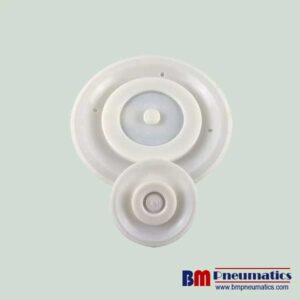
Over time, continuous operating cycles, contaminated compressed air, moisture, and unsuitable working conditions can affect diaphragm performance. A damaged diaphragm may cause air leakage, weak cleaning pulses, unstable valve operation, or increased compressed-air consumption.
Replacing the complete pulse valve is not always necessary. When the valve body and other major components remain in good condition, a correctly matched AUTEL pulse valve repair kit can restore the valve’s sealing performance and operating reliability.
The most important step is selecting a repair kit that matches the installed valve. AUTEL diaphragm kits are available for different valve sizes and configurations, so the valve model, diaphragm reference, port size, and material should be checked before ordering.
What Is an AUTEL Pulse Valve Repair Kit?
An AUTEL pulse valve repair kit is a replacement component set used to restore the operating performance of a diaphragm pulse valve. Depending on the valve configuration, the kit may include a diaphragm, sealing components, and other related parts required for maintenance.
The diaphragm controls the main compressed-air passage inside the pulse valve. When the pilot system changes the pressure above the diaphragm, the diaphragm moves rapidly to release a cleaning pulse. It then returns to its closed position when the pulse cycle is complete.
AUTEL repair kits are available for different valve configurations, including models associated with M/D20, M/D25, M/D40, M/D50, M/D60, and M/D75 diaphragm references. The correct reference depends on the installed valve model and size.
A repair kit allows maintenance teams to replace worn internal components while retaining the existing valve body when it is still serviceable. This can be useful for dust collectors with a large number of pulse valves because individual valves can be repaired without replacing complete assemblies unnecessarily.
Why Does an AUTEL Pulse Valve Need a Repair Kit?
The diaphragm inside a pulse valve is exposed to repeated mechanical movement during every cleaning cycle. The pilot valve controls the pressure balance around the diaphragm, allowing the main valve to open quickly and release compressed air into the filter cleaning system.
After the pulse, the diaphragm must return to its sealing position. Repeated cycling, moisture, dust contamination, excessive pressure, and unsuitable operating conditions can gradually reduce the flexibility and sealing performance of the diaphragm.
When the diaphragm becomes worn or damaged, the pulse valve may not operate as designed. The valve can leak continuously, deliver an insufficient cleaning pulse, or fail to close correctly after activation.
An AUTEL pulse valve repair kit provides a practical maintenance solution when the main valve body, sealing surfaces, and other internal components remain in suitable condition.
Common Signs of AUTEL Pulse Valve Diaphragm Failure
A damaged diaphragm can affect dust collector performance in several ways. Some symptoms appear suddenly, while others develop gradually as the diaphragm becomes worn.
Common signs include:
- Continuous compressed-air leakage
- Weak or incomplete cleaning pulses
- Valve remaining partially open
- Valve failing to close after a pulse
- Increased compressed-air consumption
- Abnormal operating noise
- Increasing filter differential pressure
- More frequent cleaning cycles
- Reduced dust collector cleaning efficiency
These symptoms should be investigated systematically because diaphragm failure is not the only possible cause. Solenoid valve problems, pilot valve faults, insufficient air pressure, contaminated compressed air, and control-system issues can produce similar symptoms.
Before replacing the diaphragm, maintenance personnel should check the complete pulse valve and its operating conditions.
AUTEL Pulse Valve Diaphragm: The Main Wear Component
The diaphragm is responsible for controlling the rapid opening and closing of the main pulse valve. It must remain flexible enough to respond to the pilot signal while maintaining a reliable seal when the valve is closed.
A diaphragm that has become hardened, cracked, deformed, or worn may not respond correctly. In some cases, the valve may remain open after the cleaning pulse, resulting in continuous air leakage. In other cases, the diaphragm may not open fully, reducing the cleaning force delivered to the filter elements.
Diaphragm condition should therefore be included in preventive maintenance inspections, especially in dust collectors operating continuously or using frequent pulse cleaning cycles.
Replacing the diaphragm before complete failure can help reduce unplanned downtime and prevent excessive compressed-air consumption.
How to Identify the Correct AUTEL Pulse Valve Repair Kit
Correct identification is the most important step when purchasing an AUTEL diaphragm repair kit. A similar-looking diaphragm may have different dimensions, sealing arrangements, or operating characteristics.
The valve series, model number, port size, diaphragm reference, and material should be checked together.
1. Identify the AUTEL Valve Model
The valve model should be taken from the valve body, product label, technical documentation, or existing maintenance records.
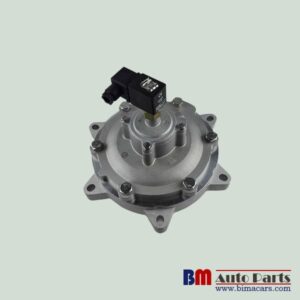
Common AUTEL valve model references include:
- AE1818B
- AE2818B
- AE1825B
- AE2825B
- AE1825R
- AE2825R
- AE1440B
- AE2440B
- AE1450B
- AE2450B
- AE1460B
- AE2460B
- AE1475I12
- AE2475I12
The exact compatibility depends on the complete valve model and configuration. The model should not be estimated solely from the external appearance of the valve.
2. Confirm the Port Size
Port size is an important reference when selecting a replacement diaphragm kit. Different valve sizes generally require different diaphragm dimensions and sealing arrangements.
Common AUTEL diaphragm repair kit references are associated with valve sizes such as:
- 3/4 inch
- 1 inch
- 1-1/2 inches
- 2 inches
- 2-1/2 inches
- 3 inches
However, port size alone is not enough to confirm compatibility. Two valves with similar nominal port sizes may use different diaphragm configurations.
3. Check the Diaphragm Reference
AUTEL diaphragm kits are commonly identified by references such as M/D20, M/D25, M/D40, M/D50, M/D60, and M/D75.
The reference should be checked against the installed valve model. For example, an M/D25 kit is associated with certain 1-inch AUTEL valve configurations, while M/D40 is used with selected 1-1/2-inch valve models.
Always confirm the complete compatibility information before ordering.
4. Confirm the Diaphragm Material
The diaphragm material should be selected according to the operating conditions of the dust collection system.
Common material options may include:
- TPE
- NBR
- EPDM
- FKM
- FKM with PTFE configurations
The appropriate material depends on temperature, chemical exposure, compressed-air quality, and operating frequency. A material suitable for a general dust collection application may not be appropriate for a high-temperature or chemically aggressive environment.
5. Compare the Existing Diaphragm
If the original diaphragm is available, check its external dimensions, sealing surface, bleed hole arrangement, and other structural features.
Photos, drawings, valve model information, and existing repair-kit codes can help the supplier confirm the correct replacement.
Common AUTEL Diaphragm Repair Kit References
AUTEL diaphragm repair kits are available in different configurations. The following references are commonly associated with specific valve families and sizes.
| Diaphragm Reference | Typical Valve Models | Approximate Port Size |
|---|---|---|
| M/D20 | AE1818B, AE2818B, selected AE1822B and AE2822B configurations | 3/4 inch and selected 1-inch valves |
| M/D25 | AE1825B, AE2825B, AE1825R, AE2825R | 1 inch |
| M/D40 | AE1440B, AE2440B, AE1440R, AE2440R | 1-1/2 inches |
| M/D50 and M/D60 | AE1450B, AE2450B, AE1460B, AE2460B | 2 inches and 2-1/2 inches |
| M/D75 | AE1475I12 and selected related configurations | 3 inches |
This table is intended as a preliminary identification reference. The correct kit should be confirmed using the complete valve model, diaphragm configuration, and supplier compatibility information.
AUTEL M/D20 Diaphragm Repair Kit
The M/D20 diaphragm reference is associated with selected smaller AUTEL pulse valve configurations, including certain AE1818B and AE2818B models.
When selecting an M/D20 repair kit, confirm the valve model, port size, diaphragm dimensions, and material. The external diameter and sealing arrangement should match the installed valve.
A correct fit is essential because a diaphragm with the wrong dimensions may not seal properly or may interfere with the opening and closing movement of the valve.
AUTEL M/D25 Diaphragm Repair Kit
The M/D25 diaphragm repair kit is commonly associated with selected 1-inch AUTEL pulse valves, including AE1825B, AE2825B, AE1825R, and AE2825R configurations.
The M/D25 diaphragm should be selected according to the specific valve model rather than the nominal port size alone. Different valve versions may have variations in their internal configuration.
Before ordering an M/D25 kit, confirm:
- Valve model
- Port size
- Diaphragm material
- Diaphragm dimensions
- Sealing arrangement
- Required quantity
The M/D25 kit is suitable for maintenance applications where the existing valve body and other major components remain in good condition.
AUTEL M/D40 Diaphragm Repair Kit
The M/D40 diaphragm reference is associated with selected 1-1/2-inch AUTEL pulse valve configurations, including AE1440B, AE2440B, AE1440R, and AE2440R models.
Larger diaphragms may be exposed to higher air volume and greater operating loads. Correct installation and suitable compressed-air conditions are important for reliable operation.
Before replacing an M/D40 diaphragm, inspect the valve seat, spring, pilot components, and sealing surfaces. If these components are damaged, replacing the diaphragm alone may not restore the valve’s performance.
AUTEL M/D50 and M/D60 Diaphragm Repair Kits
M/D50 and M/D60 references are associated with selected 2-inch and 2-1/2-inch AUTEL pulse valve configurations.
The correct reference depends on the valve model and internal diaphragm arrangement. The two references should not be treated as interchangeable without confirming compatibility.
When ordering a repair kit for larger AUTEL valves, provide the complete valve model, port size, existing diaphragm reference, and photos of the original component whenever possible.
This information helps reduce the risk of receiving a diaphragm with incorrect dimensions or an unsuitable sealing arrangement.
AUTEL M/D75 Diaphragm Repair Kit
The M/D75 diaphragm reference is associated with selected 3-inch AUTEL pulse valve configurations, including AE1475I12 and related models.
Large pulse valves are commonly used in dust collection systems requiring high-volume compressed-air pulses. Their diaphragms must operate reliably under repeated cleaning cycles.
The M/D75 kit should be selected according to the exact valve model and diaphragm configuration. Before maintenance, isolate the compressed-air supply and release all stored pressure from the system.
AUTEL Diaphragm Material Selection
Material selection has a direct influence on diaphragm service life and operating reliability. The correct material depends on the actual working environment rather than simply the purchase price.
TPE Diaphragm
TPE is used in various AUTEL diaphragm repair kit configurations. It provides flexibility and is suitable for selected industrial pulse cleaning applications.
TPE should be selected according to the temperature range, compressed-air conditions, and compatibility requirements of the installed valve.
NBR Diaphragm
NBR, also known as nitrile rubber, is commonly used in general industrial sealing applications. It may be suitable for dust collection systems operating within the material’s applicable temperature and chemical-resistance range.
The actual suitability of NBR depends on the operating environment and the specific diaphragm construction.
EPDM Diaphragm
EPDM may be considered for applications requiring particular resistance characteristics against water, weathering, or selected chemicals. Its suitability should be confirmed according to the compressed-air conditions and operating environment.
FKM Diaphragm
FKM is used in applications where higher temperature or chemical-resistance characteristics may be required. It should not be selected automatically for every application because material suitability depends on the actual working conditions.
Some AUTEL diaphragm configurations may also use PTFE-related material arrangements. The correct specification should be confirmed before ordering.
AUTEL Pulse Valve Repair Kit vs. Individual Diaphragm
The choice between an individual diaphragm and a complete repair kit depends on the condition of the pulse valve.
If only the diaphragm is worn and the spring, sealing surfaces, and other internal components remain serviceable, an individual diaphragm replacement may be sufficient.
A complete repair kit may be more appropriate when several internal components have accumulated wear or when the valve has been operating for an extended period.
A repair kit can help reduce the risk of replacing one worn component while leaving other damaged components inside the valve. However, the valve body and sealing seat should still be inspected before installation.
A complete pulse valve replacement may be necessary when the valve body is damaged or the internal sealing surfaces cannot provide reliable operation.
How to Replace an AUTEL Pulse Valve Diaphragm
The exact replacement procedure depends on the valve design. The following steps provide general maintenance guidance and should be adapted to the relevant valve documentation.
Isolate the Compressed-Air Supply
Shut off the compressed-air supply before opening the pulse valve. Release any stored pressure from the valve and connected piping.
The electrical control system should also be isolated where necessary to prevent accidental activation during maintenance.
Remove the Valve Cover
Remove the retaining components and valve cover to access the diaphragm assembly.
Keep the removed components organized because the spring, diaphragm, retaining parts, and cover must be installed in the correct positions.
Inspect the Existing Components
Remove the old diaphragm and inspect it for:
- Cracks
- Tears
- Deformation
- Hardening
- Excessive wear
- Damage around the sealing edge
The spring, valve seat, and internal sealing surfaces should also be inspected. If any major component is damaged, a diaphragm replacement alone may not be sufficient.
Clean the Sealing Surfaces
Remove dust, oil, and other contamination from the internal components and sealing surfaces.
Small particles trapped between the diaphragm and valve seat can cause leakage after reassembly. Use a suitable cleaning method that does not damage the valve or diaphragm components.
Install the Replacement Diaphragm
Install the replacement diaphragm in the correct orientation and position. Ensure that it is aligned properly and is not twisted, folded, or mechanically damaged.
If the repair kit contains additional components, install them according to the relevant valve configuration.
Reassemble the Valve
Reinstall the spring, cover, and retaining components. Tighten the fasteners evenly and avoid excessive tightening that could deform the valve cover or affect sealing performance.
Restore Pressure and Test the Valve
Restore the compressed-air supply gradually and check the valve for leakage.
Activate the valve and observe the cleaning pulse. The valve should open and close consistently without continuous air leakage or abnormal noise.
If the valve does not operate correctly, inspect the pilot valve, air pressure, tubing, spring, and diaphragm installation.
Why Does a New AUTEL Diaphragm Fail Quickly?
A newly installed diaphragm should not be assumed to be defective immediately if it fails shortly after replacement. Several operating or installation conditions can cause premature failure.
Incorrect Repair Kit
A diaphragm may appear similar to the original component but have different dimensions, material characteristics, or sealing arrangements.
The valve model and existing diaphragm reference should be checked before installation.
Contaminated Compressed Air
Moisture, oil, and solid particles can affect diaphragm movement and sealing surfaces. Contaminated air may increase wear and reduce the service life of the replacement component.
Incorrect Installation
A diaphragm that is twisted, incorrectly positioned, or mechanically damaged during installation may leak or fail to operate correctly.
The sealing surface and bleed hole arrangement should be checked carefully during assembly.
Excessive Pulse Frequency
High cleaning frequency increases the number of diaphragm operating cycles. If the dust collector uses an unnecessarily high pulse frequency, the diaphragm may experience additional mechanical stress.
The cleaning sequence should be reviewed if repeated diaphragm failures occur.
Unsuitable Material
A diaphragm operating outside its suitable temperature or chemical-resistance range may deteriorate prematurely.
Material selection should be based on the actual operating environment rather than using the same material for every application.
Damaged Valve Seat
If the valve seat or another internal sealing surface is damaged, a new diaphragm may not seal correctly.
The valve body and sealing surfaces should be inspected whenever a replacement diaphragm fails repeatedly.
Compressed-Air Quality and AUTEL Pulse Valve Service Life
Compressed-air quality is an important factor in pulse valve maintenance. Water, oil, and solid contaminants can enter the valve through the compressed-air system and affect the diaphragm, pilot valve, and sealing surfaces.
The compressed-air system should be inspected whenever the dust collector experiences repeated leakage or premature diaphragm failure.
Suitable filtration, regular drainage, and stable operating pressure can help maintain reliable pulse valve operation. The air supply should also be checked for pressure fluctuations that may affect the opening and closing of the valve.
A diaphragm replacement cannot compensate for poor compressed-air quality or an incorrectly configured operating system.
When Should an AUTEL Pulse Valve Repair Kit Be Replaced?
There is no single replacement interval that applies to every AUTEL pulse valve. Service life depends on several operating factors, including:
- Pulse cleaning frequency
- Operating temperature
- Compressed-air quality
- Dust concentration
- Chemical exposure
- Operating pressure
- Filter cleaning requirements
- Overall equipment duty cycle
Regular inspection is more reliable than replacing diaphragms according to an arbitrary schedule. Maintenance teams should monitor air leakage, pulse performance, differential pressure, and compressed-air consumption.
A repair kit should be considered when the diaphragm shows visible deterioration or when the valve begins to operate inconsistently.
AUTEL Pulse Valve Repair Kits for Dust Collector Applications
AUTEL pulse valves and diaphragm repair components are used in various industrial dust collection and pneumatic cleaning applications.
Typical applications include:
- Cement production
- Building materials manufacturing
- Mining
- Metallurgy and steel production
- Power generation
- Bulk-material handling
- Silo and conveyor systems
- Industrial dust collection
- Emission-control systems
The appropriate diaphragm material and repair kit should be selected according to the valve model and operating conditions. The industry alone is not sufficient to determine compatibility.
For applications involving high temperatures, corrosive gases, moisture, or frequent pulse cleaning, additional attention should be given to material selection and compressed-air quality.
How to Order the Correct AUTEL Pulse Valve Repair Kit
When requesting a quotation, provide sufficient information for the supplier to verify the replacement component.
The following information is recommended:
- AUTEL valve model
- Valve series or type
- Port size
- Diaphragm reference
- Existing repair-kit code
- Diaphragm material
- Number of diaphragms required
- Operating temperature
- Working pressure
- Dust collector application
- Required quantity
- Photos of the valve and nameplate
For example, instead of requesting only an “AUTEL 1-inch diaphragm,” provide the complete valve model, such as AE1825B or another applicable reference, together with the existing diaphragm code whenever possible.
This information allows the supplier to cross-reference the valve and reduce the risk of receiving an incompatible repair kit.
AUTEL Pulse Valve Repair Kit Supply
BMP Pneumatics supplies pulse valve diaphragms and repair kits for industrial dust collection applications. Our product range includes replacement components for pulse valves used in cement, building materials, metallurgy, mining, chemical processing, power generation, and other industrial environments.
When requesting an AUTEL pulse valve repair kit, customers should provide the valve model, port size, diaphragm reference, and application details. Photos of the existing valve or diaphragm can also help with compatibility confirmation.
Selecting the correct replacement component helps reduce maintenance risks and supports reliable operation of the dust collection system.
FAQ About AUTEL Pulse Valve Repair Kits
What is an AUTEL pulse valve repair kit?
An AUTEL pulse valve repair kit is a set of replacement components used to restore the operating performance of a diaphragm pulse valve. Depending on the valve configuration, the kit may include a diaphragm and other related components.
How do I select the correct AUTEL diaphragm kit?
Confirm the complete valve model, port size, diaphragm reference, material, and internal configuration. The valve model should be checked rather than selecting a kit based only on nominal port size.
What is the AUTEL M/D25 diaphragm kit used for?
The M/D25 reference is associated with selected 1-inch AUTEL pulse valve configurations, including certain AE1825B, AE2825B, AE1825R, and AE2825R models. Compatibility should be confirmed using the complete valve model.
What is the difference between M/D40 and M/D50 diaphragm kits?
M/D40 and M/D50 references are associated with different valve sizes and configurations. M/D40 is commonly associated with selected 1-1/2-inch valves, while M/D50 is associated with selected larger valve configurations. The exact reference should be confirmed using the installed valve model.
Can I replace only the AUTEL diaphragm?
Yes, if the valve body, valve seat, spring, and other internal components remain in good condition. A complete repair kit may be more appropriate when several internal components are worn.
Which material is suitable for an AUTEL diaphragm?
TPE, NBR, EPDM, FKM, and other configurations may be available for different applications. The material should be selected according to temperature, chemical exposure, compressed-air quality, and operating conditions.
Why does my AUTEL pulse valve leak after replacing the diaphragm?
Possible causes include incorrect diaphragm orientation, an incompatible repair kit, contamination on the sealing surface, a damaged valve seat, spring problems, pilot valve faults, or unsuitable air pressure.
How often should AUTEL pulse valves be inspected?
Inspection frequency depends on operating conditions, pulse frequency, temperature, compressed-air quality, and dust loading. Regular inspection should be performed to identify leakage, diaphragm wear, and changes in cleaning performance.
Conclusion
An AUTEL pulse valve repair kit provides a practical way to restore a worn diaphragm pulse valve without automatically replacing the complete valve assembly. The key to successful maintenance is selecting a replacement kit that matches the installed valve model, size, diaphragm configuration, and material.
Before ordering an AUTEL diaphragm kit, confirm the valve model, port size, existing reference code, and operating conditions. If the valve body and other major components remain serviceable, replacing the diaphragm or using a complete repair kit can restore reliable pulse operation and reduce unnecessary maintenance costs.
Regular inspection, clean compressed air, correct installation, and suitable replacement components are essential for maintaining consistent dust collector performance and reducing unexpected downtime.
For AUTEL pulse valve diaphragm and repair kit requirements, contact BMP Pneumatics with your valve model and application details.