
ASCO G353A045 Pulse Jet Valve: 1.5-Inch Specifications, Applications, and Maintenance Guide
1. Overview of the ASCO G353A045 Pulse Jet Valve
The ASCO G353A045 is a 1.5-inch pulse jet valve designed for compressed-air cleaning systems in industrial dust collectors. It belongs to the ASCO Series 353 and uses a remote pilot-operated diaphragm structure.
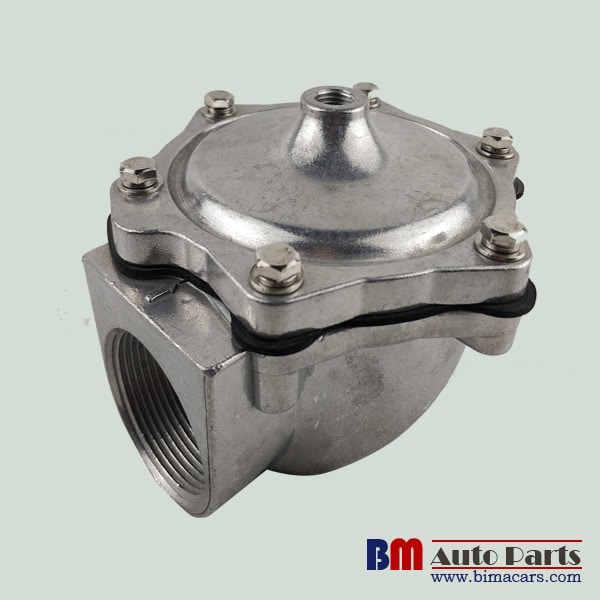
In a typical baghouse filtration system, pulse jet valves release short bursts of compressed air into blow tubes. The resulting air pulses travel through the filter bags or cartridges, removing accumulated dust from their surfaces and helping maintain stable filtration performance.
The G353A045 is designed for applications requiring a larger air passage than the 3/4-inch and 1-inch models in the same series. Its 1.5-inch connection and remote pilot arrangement make it suitable for industrial dust collectors that require controlled, high-volume compressed-air pulses.
For equipment manufacturers and maintenance teams, correct valve selection, pilot control configuration, and diaphragm maintenance are essential to reliable operation.
2. ASCO G353A045 Technical Specifications
The following specifications are based on published ASCO Series 353 catalogue information for the threaded connection configuration.
| Parameter | Specification |
|---|---|
| Model | G353A045 |
| Brand | ASCO |
| Product Series | 353 |
| Valve Type | Pulse Jet Valve |
| Nominal Port Size | 1.5 inch |
| Main Connection | G thread |
| Remote Pilot Connection | G 1/4 |
| Operating Principle | Remote pilot-operated diaphragm valve |
| Valve Orifice | 52 mm |
| Flow Coefficient (Kv) | 46 m³/h |
| Reference Flow Rate | Approximately 768 l/min |
| Minimum Differential Pressure | 0.35 bar |
| Maximum Differential Pressure | 8.5 bar |
| Body Material | Aluminium |
| Spring Material | Stainless steel |
| Diaphragm Material | Chloroprene (CR) |
| Diaphragm Repair Kit | C113825 |
Technical note: The flow rate is a catalogue reference value, not a guaranteed system output under every installation condition. Actual performance depends on air pressure, reservoir capacity, pipework, pilot operation, and system configuration. Confirm the exact valve version and material configuration before ordering.
3. Design Features of the G353A045
3.1 Diaphragm-Operated Structure
The G353A045 uses a diaphragm to control the main compressed-air passage.
During normal operation, the diaphragm remains closed through the pressure balance inside the valve. When the remote pilot mechanism releases pressure from the control chamber, the pressure difference across the diaphragm causes the main valve to open.
Compressed air then flows through the valve into the dust collector blow tube. When the pilot signal ends, the pressure balance is restored and the diaphragm returns to its closed position.
This operating principle allows the valve to perform repeated cleaning cycles in automatic filtration systems.
3.2 Remote Pilot Control
The G353A045 is a remote pilot-operated valve. Its pilot connection is commonly specified as G1/4.
A separate pilot solenoid valve or pilot control assembly provides the pneumatic signal required to operate the main valve. This arrangement allows multiple pulse valves to be controlled in sequence by a dust collector controller.
For the G353A045, the ASCO Series 353 catalogue identifies Series C20 pilot valve boxes and Series 262/272 single pilot valves as recommended pilot control arrangements.
The pilot control components must be selected according to the valve configuration and the requirements of the complete pneumatic system.
3.3 1.5-Inch Air Passage
The 1.5-inch nominal connection and 52 mm valve orifice make the G353A045 suitable for systems requiring a larger compressed-air passage.
The valve’s air delivery performance is influenced by more than its nominal port size. Reservoir capacity, pipe diameter, blow tube design, air pressure, and pulse duration all affect the cleaning result.
Therefore, the valve should be selected as part of the complete dust collector cleaning system rather than by port size alone.
4. Typical Industrial Applications
The ASCO G353A045 is used in industrial filtration systems where compressed-air pulses are required to clean filter elements.
4.1 Cement Production
Cement manufacturing involves crushing, grinding, conveying, and storage operations that generate dust. Baghouse filtration systems are commonly used to capture airborne particles.
Pulse jet valves provide the compressed-air pulses needed to remove dust from filter bags and maintain stable filtration performance.
4.2 Steel and Metal Processing
Steel mills and metal processing facilities use dust collection systems to control particulate emissions from production and material handling operations.
The G353A045 can be considered for these systems when its air capacity, pressure range, and installation arrangement match the equipment requirements.
4.3 Power Generation
Industrial filtration equipment in power plants requires regular filter cleaning to maintain airflow and dust collection efficiency. Pulse jet valves form part of the compressed-air cleaning arrangement.
4.4 Mining and Mineral Processing
Crushing, screening, conveying, and bulk material handling can generate substantial amounts of dust. Pulse jet valves support the cleaning of filter elements in dust extraction systems used in these operations.
4.5 Chemical and Building Materials Industries
Industrial processes involving powders and bulk materials often require baghouse filters. Remote pilot-operated valves can be integrated into automated cleaning systems to maintain filter performance.
5. C113825 Diaphragm Repair Kit for G353A045
The diaphragm is one of the most important wear components in a pulse jet valve. Repeated pressure changes and mechanical movement can eventually cause fatigue, deformation, or sealing problems.
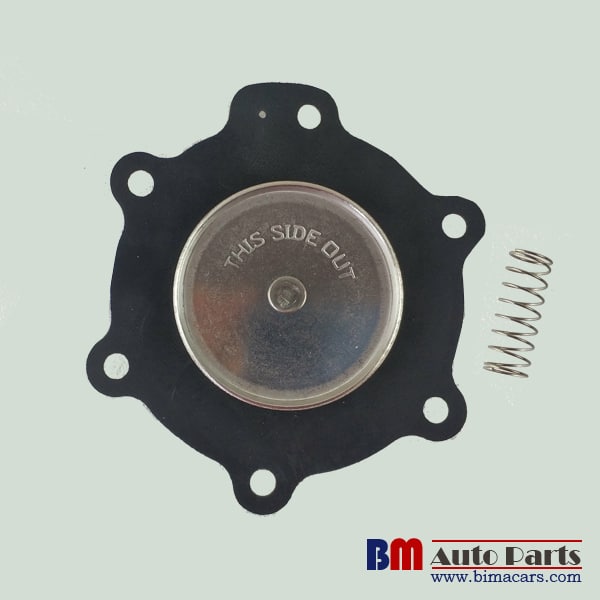
The C113825 diaphragm repair kit is commonly listed for the ASCO G353A045.
The repair kit is intended for diaphragm maintenance and replacement. Its material configuration should be checked against the original valve before ordering.
5.1 C113825 Repair Kit Information
| Parameter | Information |
|---|---|
| Repair Kit Model | C113825 |
| Compatible Valve Reference | G353A045 |
| Valve Nominal Size | 1.5 inch |
| Commonly Listed Material | NBR / Buna |
| Alternative Material | FKM / Viton, subject to availability and compatibility |
5.2 What to Check Before Ordering
Before purchasing a replacement kit, verify:
- Valve model: Confirm that the original valve is G353A045.
- Repair kit reference: Check C113825 against the original valve documentation.
- Diaphragm material: Confirm the required elastomer according to the operating temperature and compressed-air conditions.
- Component arrangement: Compare the diaphragm profile and included components with the original assembly.
- Operating conditions: Verify pressure and temperature compatibility.
A repair kit should not be selected based on nominal valve size alone. Other 1.5-inch ASCO 353 series models may use different diaphragm assemblies.
5.3 Difference Between G353A045, G353A046, and SCG353A047
Several ASCO 353 series models have a nominal 1.5-inch connection, but their repair kit references differ.
| Valve Model | Nominal Size | Commonly Listed Repair Kit |
|---|---|---|
| G353A045 | 1.5 inch | C113825 |
| G353A046 | 1.5 inch | C113826 |
| SCG353A047 | 1.5 inch | C113827 |
These repair kits should not be treated as interchangeable. Confirm the complete valve model and original parts configuration before ordering.
6. Common Operating Problems and Maintenance
Regular maintenance helps maintain pulse cleaning performance and reduces the risk of unexpected dust collector downtime.
6.1 Weak Cleaning Pulses
Weak pulses may result from:
- Insufficient compressed-air pressure.
- Inadequate reservoir capacity.
- Restricted air passages.
- A damaged or worn diaphragm.
- Incorrect pilot control operation.
- Unsuitable pulse timing.
Check the compressed-air supply and pilot control system before replacing valve components.
6.2 Continuous Air Leakage
Continuous leakage may indicate diaphragm damage, contamination on the sealing surface, or incorrect assembly.
Inspect the diaphragm and related sealing components. Replace damaged parts with a repair kit confirmed for the exact valve model.
6.3 Valve Fails to Open
If the valve does not open during a cleaning cycle, possible causes include:
- Insufficient differential pressure.
- Blocked pilot passage.
- Failure of the pilot solenoid valve.
- Damaged diaphragm.
- Incorrect pneumatic connections.
A systematic inspection of the air supply, pilot circuit, and main valve can help identify the cause.
6.4 Recommended Maintenance Practices
For reliable operation, maintenance personnel should:
- Inspect valve connections and manifold joints regularly.
- Maintain a clean and stable compressed-air supply.
- Check pilot connections and control components.
- Monitor unusual leakage and changes in cleaning performance.
- Inspect the diaphragm when abnormal operation occurs.
- Use compatible repair kits for the exact valve model.
- Follow the manufacturer’s installation and maintenance instructions.
Before carrying out maintenance, isolate the compressed-air supply and ensure the system is fully depressurized.
7. How to Select a Replacement G353A045 Valve
When selecting a replacement valve, verify the complete model and installation requirements.
| Selection Item | What to Verify |
|---|---|
| Model | G353A045 |
| Nominal Port Size | 1.5 inch |
| Main Connection | G thread |
| Remote Pilot Connection | G1/4 |
| Valve Orifice | 52 mm |
| Differential Pressure | 0.35–8.5 bar |
| Diaphragm Material | Confirm the original configuration |
| Repair Kit | C113825, subject to configuration verification |
| Installation Dimensions | Check against the original valve |
For replacement projects, photographs of the original valve, its nameplate, pilot connection, and mounting arrangement can help identify the correct configuration.
This is particularly important when replacing older equipment or valves with incomplete identification markings.
8. Frequently Asked Questions
Q1: What is the nominal size of the ASCO G353A045?
The G353A045 has a nominal 1.5-inch threaded connection.
Q2: What is the remote pilot connection size?
The remote pilot connection is commonly specified as G1/4.
Q3: What is the operating pressure range of the G353A045?
The ASCO Series 353 catalogue lists a minimum differential pressure of 0.35 bar and a maximum of 8.5 bar for this model.
Q4: Which diaphragm repair kit is used for the G353A045?
C113825 is commonly listed as the diaphragm repair kit for the G353A045. Confirm the diaphragm material and exact valve configuration before ordering.
Q5: What is the difference between G353A045 and G353A046?
Both models are listed as 1.5-inch ASCO 353 series pulse valves, but they have different model references and repair kit numbers. G353A045 is associated with C113825, while G353A046 is associated with C113826.
Q6: Can the G353A045 be used in cement plant dust collectors?
Yes. It can be used in industrial dust collector systems where the valve’s connection size, pressure range, pilot arrangement, and air delivery characteristics match the system requirements.
Q7: Does the G353A045 have an integrated solenoid coil?
The G353A045 is a remote pilot-operated main pulse valve. Its operation relies on a separate pilot control arrangement rather than an integrated solenoid coil on the main valve.
9. Conclusion
The ASCO G353A045 is a 1.5-inch remote pilot-operated pulse jet valve designed for industrial compressed-air cleaning systems. Its 52 mm valve orifice, G1/4 pilot connection, and diaphragm-operated structure make it suitable for dust collector applications requiring a larger air passage.
For maintenance and replacement, correct identification of the valve and its spare parts is essential. C113825 is the commonly listed diaphragm repair kit for the G353A045, while other 1.5-inch ASCO 353 series models may require different repair kits.
BMP Pneumatics supplies industrial pulse jet valves and diaphragm repair kits for dust collection systems. Contact our team with your original valve model, nameplate information, or product photographs if you need assistance identifying a suitable replacement or repair kit.