
ASCO pulse valves play an important role in industrial dust collection systems by delivering compressed air pulses that remove accumulated dust from filter bags or cartridges. When a valve fails to operate correctly, cleaning efficiency may decrease, compressed air consumption may increase, and differential pressure across the filters may rise.
However, not every pulse valve problem originates inside the valve. Unstable air pressure, electrical control faults, contaminated air passages, and worn internal components can produce similar symptoms. Therefore, identifying the root cause before replacing parts is essential for effective maintenance.
This guide explains common ASCO pulse valve problems, practical troubleshooting methods, and the situations in which a diaphragm or repair kit may be required.
1. Common ASCO Pulse Valve Problems
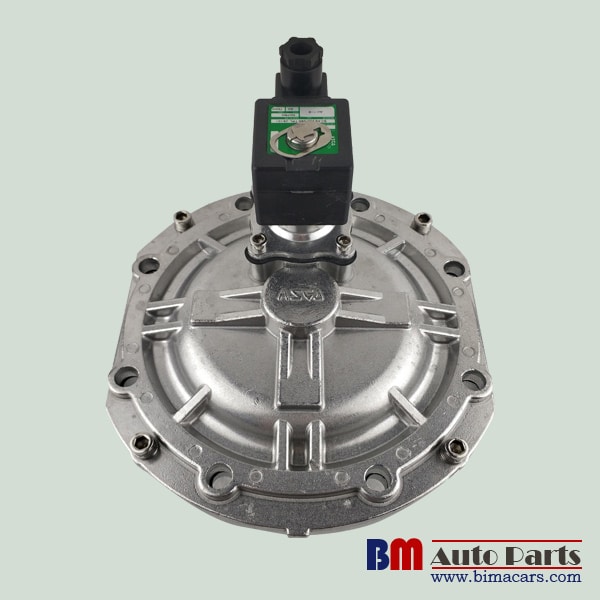
The following table summarizes typical symptoms found in pulse-jet dust collection systems. The possible causes are diagnostic starting points, not definitive conclusions.
| Problem | Possible Cause | Recommended Action |
|---|---|---|
| Continuous air leakage | Damaged diaphragm, contaminated sealing surface, loose connection | Locate the leak and inspect the relevant components |
| Weak cleaning pulse | Insufficient air supply, restricted passage, valve malfunction | Check pressure, piping, and valve operation |
| Valve does not activate | Electrical fault, solenoid problem, blocked passage | Verify the control signal and pneumatic supply |
| Valve does not close correctly | Diaphragm damage, contamination, internal wear | Inspect sealing components and valve condition |
| Irregular pulse timing | Unstable air pressure, control issues, restricted passages | Compare valve behavior and check system controls |
| Repeated diaphragm failure | Incorrect replacement part, unsuitable material, unresolved operating issue | Verify compatibility and investigate the original cause |
Before ordering replacement parts, identify the complete ASCO valve model and confirm the applicable repair kit or diaphragm reference.
2. ASCO Pulse Valve Leaking Air
Continuous leakage is one of the most important symptoms to investigate because it can waste compressed air and interfere with the dust collector’s operating performance.
Possible causes
A damaged or deteriorated diaphragm may prevent the valve from sealing correctly. Particles, corrosion, or residue on a sealing surface can also interfere with closure. In other cases, the leakage may originate from an external connection or another component in the pneumatic system.
Troubleshooting steps
First, determine where the air is escaping. Inspect external fittings and connections, then check whether the leakage appears to originate from the valve assembly.
Before opening the valve, isolate the equipment, release stored pressure safely, and follow the site’s lockout/tagout procedures. Inspect the diaphragm and relevant sealing surfaces for cracks, deformation, wear, or contamination.
If the diaphragm is damaged, a compatible replacement may resolve the problem. However, if leakage continues after replacement, examine the sealing surfaces, internal components, and assembly condition rather than immediately installing another diaphragm.
3. Weak Cleaning Pulses
A weak cleaning pulse may prevent accumulated dust from being removed effectively from filter media. Over time, this can contribute to increased filter differential pressure and reduced dust collection performance.
Check the compressed air supply
Begin by checking the available compressed air pressure while the cleaning system is operating. Pressure measured when the system is idle may not reflect the conditions during a cleaning cycle.
Inspect the air header, connecting pipes, filters, and fittings for restrictions or leakage. Also check whether several valves exhibit the same symptom. If multiple valves produce weak pulses, the cause may involve a shared air supply rather than individual valve failures.
Inspect the valve and control sequence
If the air supply is adequate, investigate whether the valve opens correctly and delivers a consistent pulse. A damaged diaphragm, restricted internal passage, or malfunctioning pilot mechanism may interfere with operation.
The controller should also be checked. Incorrect pulse timing or an unreliable output signal can reduce cleaning effectiveness even when the valve itself remains serviceable.
Use the operating specifications for the actual valve and dust collector when evaluating air pressure and pulse settings. Avoid applying a generic pressure value to every installation.
4. ASCO Pulse Valve Does Not Operate
A valve that fails to activate may have an electrical, pneumatic, or mechanical fault. These possibilities should be checked separately.
Verify the electrical control system
Confirm that the dust collector controller issues the expected output signal. Inspect the wiring, connectors, and relevant electrical components according to the equipment documentation.
For a solenoid-operated configuration, verify the specified electrical supply and check the solenoid components using the manufacturer’s procedures. Electrical testing should be performed by qualified personnel with appropriate safety precautions.
Check the pneumatic and mechanical components
If the control signal is correct, verify that the valve receives an adequate compressed air supply. Restricted passages, contamination, or damaged internal components may prevent the valve from responding as expected.
Do not assume that a failed diaphragm is responsible for every non-operating valve. Replacing a diaphragm will not correct a faulty electrical circuit or an inadequate air supply.
5. Slow or Irregular Valve Response
Inconsistent valve response can result in uneven cleaning across the dust collector. The underlying cause may be related to the air supply, valve condition, or control system.
Start by comparing the affected valve with other valves operating under similar conditions. If only one valve responds slowly, inspect its local air connection, control circuit, and internal components.
If several valves exhibit the same behavior, investigate shared factors such as air header pressure, controller operation, and common electrical connections.
Contamination or restricted pilot passages may also affect valve response. Where inspection identifies internal wear or damage, replace the affected components with parts verified for the complete valve model.
6. When Should You Replace an ASCO Pulse Valve Diaphragm?
The diaphragm is a critical component in many pulse valve designs. Depending on the configuration and failure mode, diaphragm deterioration may cause leakage, inconsistent operation, or reduced cleaning performance.
Consider diaphragm replacement when inspection identifies:
- Cracks, tears, or visible deformation.
- Hardening or deterioration inconsistent with the expected service condition.
- Leakage traced to the diaphragm or its sealing interface.
- Persistent operating problems after the air supply and control signals have been verified.
- Repeated failure confirmed to originate from the diaphragm assembly.
Nevertheless, replace the diaphragm only after establishing that it is the source of the problem. Other faults may produce similar symptoms.
When selecting a replacement, verify the complete valve model, applicable part number, dimensions, material requirements, and assembly configuration. ASCO product families may include different designs, so brand identification alone is not sufficient to establish compatibility.
7. ASCO Diaphragm or Repair Kit: Which Should You Choose?
The correct replacement depends on the diagnosed fault and the condition of the remaining valve components.
When a diaphragm-only replacement is appropriate
A diaphragm-only replacement may be suitable when the diaphragm is damaged but the other relevant components remain in acceptable condition.
This approach can avoid replacing serviceable parts. However, the replacement must match the specific valve configuration and operating requirements.
When a repair kit is a better option
A repair kit may be preferable when multiple service components require replacement or when the applicable maintenance procedure specifies a kit-based repair.
Check the exact kit contents before ordering. Do not assume that every ASCO repair kit contains the same diaphragm, seals, springs, or other components.
If the valve body is damaged or the fault originates in a non-serviceable component, a diaphragm or repair kit may not be sufficient. In that situation, evaluate the appropriate repair or replacement option for the complete valve.
8. How to Replace an ASCO Pulse Valve Diaphragm
The exact replacement procedure depends on the valve model and construction. Always follow the applicable manufacturer documentation.
- Isolate the system. Shut down the equipment, isolate the compressed air supply, release stored pressure safely, and apply the required lockout/tagout procedures.
- Identify the valve. Record the complete model and existing component references before disassembly.
- Inspect the valve. Check the diaphragm, sealing surfaces, and related components for wear, damage, and contamination.
- Verify the replacement. Confirm that the diaphragm or repair kit matches the specified valve configuration.
- Install the component. Follow the prescribed orientation, assembly procedure, and tightening requirements.
- Restore the system. Reconnect the relevant components and restore the air supply according to the maintenance procedure.
- Test operation. Check for leakage and verify consistent valve response under the specified operating conditions.
If the valve continues to malfunction, reassess the original diagnosis before repeating the replacement process.
9. Preventing Recurring ASCO Pulse Valve Problems
Corrective maintenance restores operation after a fault occurs. Preventive maintenance, meanwhile, helps reduce the likelihood of repeated failures.
Maintain compressed air quality. Moisture, oil, rust, and particulate contamination can affect valve operation. Inspect air treatment equipment, drainage arrangements, and air headers as part of the maintenance program.
Monitor operating conditions. Track relevant air pressure, cleaning performance, and valve behavior. Changes in these indicators can reveal developing problems.
Use verified replacement parts. Incorrect dimensions, unsuitable materials, or incompatible components may cause poor sealing and premature failure.
Inspect the complete system. Check the controller, wiring, air supply, connections, and valve assembly. A system-level inspection helps distinguish a valve fault from a shared operating problem.
Maintain service records. Record the valve model, replacement part number, maintenance date, observed symptoms, and corrective action. These records can improve spare-parts planning and help identify recurring failures.
10. Selecting ASCO Pulse Valve Replacement Parts
When sourcing an ASCO diaphragm or repair kit, provide enough technical information to verify the intended application.
Useful details include:
- Complete valve model and identification information.
- Original diaphragm or repair kit part number, if available.
- Product label and component photographs.
- Required dimensions and material specifications, where documented.
- Operating environment and relevant service conditions.
- Required quantity and delivery destination.
If the original part number is unavailable, photographs and complete valve identification details can help a supplier investigate the requirement. However, visual similarity alone cannot conclusively establish compatibility.
For maintenance teams operating multiple dust collectors, keeping a record of installed valve models and approved replacement references can reduce procurement errors and simplify future maintenance.
11. Frequently Asked Questions
Why does my ASCO pulse valve keep leaking air?
Possible causes include diaphragm damage, contamination on sealing surfaces, incorrect assembly, or loose connections. Locate the leak and inspect the relevant components before selecting a replacement.
Can a damaged diaphragm cause a weak cleaning pulse?
Yes. Depending on the valve design and failure mode, diaphragm damage may affect valve operation. However, insufficient air pressure, restricted passages, and control problems can also produce weak pulses.
Should I replace the diaphragm or the complete repair kit?
Replace the diaphragm alone when the fault is isolated to that component and the other relevant parts remain serviceable. Consider a repair kit when additional components require replacement, after confirming the kit contents and compatibility.
Are all ASCO pulse valve diaphragms interchangeable?
No. Compatibility depends on the complete valve model and applicable component specification. Confirm the replacement reference rather than selecting a diaphragm based on brand name or appearance alone.
Why does a replacement diaphragm fail again?
Possible causes include an incompatible replacement, unsuitable material, contamination, incorrect installation, or unresolved operating problems. Investigate the root cause before installing another component.
How can I identify the correct ASCO repair kit?
Start with the complete valve model and original part number, if available. Verify the proposed kit against the applicable product documentation and confirm which components are included.
Conclusion
Effective ASCO pulse valve troubleshooting requires a systematic approach. Air leakage, weak cleaning pulses, irregular response, and valve activation failures may originate from different electrical, pneumatic, or mechanical problems.
Check the air supply and control system before replacing internal components. When a diaphragm or repair kit is required, verify the complete valve model and applicable part specifications to minimize compatibility risks and repeated maintenance.
BMP Pneumatics supplies industrial pulse valve replacement components, including diaphragms and repair kits for supported product ranges. Contact our team with your valve identification details and replacement requirements to discuss a suitable option.