

Introduction
Pulse jet valves and pulse valves are two terms commonly used in industrial dust collection systems. Engineers, maintenance teams, and purchasing professionals often use these terms interchangeably when searching for replacement valves or components.
In most industrial applications, however, the two terms refer to essentially the same type of valve.
A pulse valve is designed to release a short, high-pressure burst of compressed air to clean filter bags or cartridges. When the valve is used specifically in a pulse jet dust collector, it is often called a pulse jet valve or pulse jet cleaning valve.
Understanding this terminology is important when searching for replacement products, comparing manufacturers, or purchasing spare parts such as diaphragms and repair kits.
This guide explains the relationship between pulse jet valves and pulse valves, how they work, where they are used, and how to select the right valve for an industrial dust collection system.
What Is a Pulse Jet Valve?
A pulse jet valve is a fast-acting pneumatic diaphragm valve designed to release compressed air in short pulses.

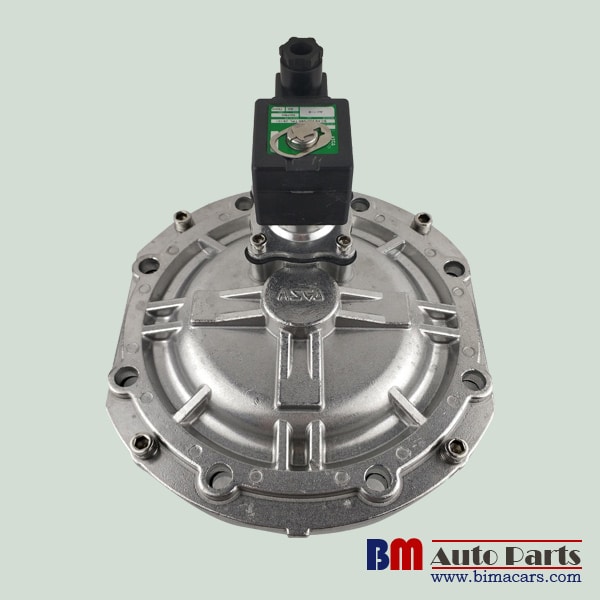
It is a key component of a pulse jet dust collector.
During operation, compressed air is stored in an air manifold. When the dust collector controller sends an electrical signal, the pilot solenoid activates the valve.
The diaphragm opens rapidly and allows compressed air to pass through the valve outlet and into the blow tube.
The resulting high-energy air pulse expands inside the filter and removes accumulated dust from the filter surface.
This process allows the filter to continue operating without requiring frequent manual cleaning.
What Is a Pulse Valve?
A pulse valve is the general term used to describe the same type of fast-acting diaphragm valve used in pulse cleaning applications.
In the dust collection industry, the terms “pulse valve,” “pulse jet valve,” and “dust collector pulse valve” are frequently used to describe valves with the same basic operating principle.
For example, a supplier may list a product as:
- Pulse Valve
- Pulse Jet Valve
- Pulse Cleaning Valve
- Dust Collector Pulse Valve
- Diaphragm Pulse Valve
Although the terminology may vary, the actual product may perform the same function.
Are Pulse Jet Valves and Pulse Valves the Same?
In most dust collection applications, yes.
The main difference is usually terminology rather than valve construction.
“Pulse valve” describes the valve based on its operating function.
“Pulse jet valve” emphasizes the application: using a compressed-air pulse jet to clean filters.
Therefore, when searching for a replacement valve, customers may find the same product listed under several different names.
For example, a right-angle diaphragm valve used to clean a baghouse filter may be described as both a pulse valve and a pulse jet valve.
How Does a Pulse Jet Valve Work?
The operation of a pulse jet valve involves several stages.
Stage 1: Compressed Air Enters the Valve
Compressed air from the air header enters the valve.
The pressure is initially balanced around the diaphragm, keeping the valve closed.
Stage 2: Electrical Signal Activates the Pilot Valve
The dust collector controller sends an electrical signal to the solenoid coil.
The pilot valve opens and releases pressure from the diaphragm control chamber.
Stage 3: Main Diaphragm Opens
The pressure difference across the diaphragm causes it to move rapidly.
The main airflow passage opens.
Stage 4: Compressed Air Pulse Is Released
A large volume of compressed air is discharged through the valve outlet and into the blow tube.
The air pulse removes dust from the filter media.
Stage 5: Valve Closes
After the electrical signal ends, the pilot valve closes.
Pressure is restored in the diaphragm chamber, allowing the diaphragm to return to its closed position.
The valve is then ready for the next cleaning cycle.
Main Components of a Pulse Jet Valve
A typical pulse jet valve contains several important components.
Valve Body
The valve body contains the main air passages and provides the mechanical structure of the valve.
Aluminum alloy is commonly used because it provides a combination of strength, corrosion resistance, and low weight.
Diaphragm
The diaphragm is the main working component.
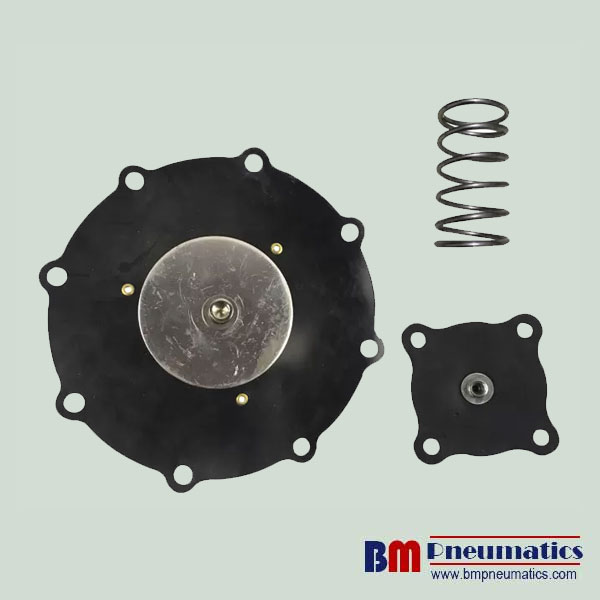
It opens and closes the main air passage and must withstand repeated pressure cycles.
Common materials include:
- NBR
- EPDM
- FKM
- Silicone
Pilot Solenoid Valve
The pilot solenoid controls the pressure above the diaphragm.
It converts the electrical signal from the controller into mechanical valve movement.
Spring
The spring assists the diaphragm in returning to the closed position.
Seals and O-Rings
These components prevent compressed air leakage and maintain proper pressure inside the valve.
Common Types of Pulse Jet Valves
Pulse jet valves are available in several configurations.
Right Angle Pulse Valve
The inlet and outlet are positioned at approximately 90 degrees.
This is one of the most common configurations for industrial dust collectors.
Right angle pulse valves are widely used because they are relatively compact and easy to install on air manifolds.
Typical applications include:
- Cement plants
- Steel mills
- Mining facilities
- Power plants
- Chemical plants
Straight Through Pulse Valve
The inlet and outlet are aligned along the same axis.
This configuration can provide a direct airflow path and may be selected for specific dust collector designs.
Submerged Pulse Valve
A submerged pulse valve is installed directly inside the compressed air manifold.
This configuration can reduce external piping requirements and provide a compact installation.
Submerged valves are commonly found in cartridge dust collectors and other compact filtration systems.
Where Are Pulse Jet Valves Used?
Pulse jet valves are used wherever compressed-air filter cleaning is required.
Cement Manufacturing
Cement plants generate significant amounts of dust during:
- Crushing
- Grinding
- Conveying
- Mixing
- Packaging
Pulse jet valves help maintain filter performance in baghouses and cartridge collectors.
Steel Manufacturing
Steel plants use pulse cleaning systems for dust generated during:
- Furnace operation
- Material handling
- Grinding
- Welding
- Casting
Mining
Mining operations often generate abrasive dust during crushing and material processing.
Reliable pulse cleaning helps maintain filtration efficiency.
Power Generation
Dust collection systems in power plants may use pulse valves for applications involving ash, coal dust, and other particulate materials.
Chemical Processing
Chemical plants may require specialized diaphragm materials depending on temperature and chemical exposure.
Woodworking
Woodworking facilities use cartridge and baghouse dust collectors to remove sawdust and fine particles.
Pulse Jet Valve vs Solenoid Valve
A common source of confusion is the difference between a pulse jet valve and a standard solenoid valve.
Although both may use a solenoid coil, they are designed for different purposes.
A standard solenoid valve is a general-purpose flow control device.
A pulse jet valve is specifically designed to release a high-volume compressed-air pulse for filter cleaning.
| Feature | Pulse Jet Valve | Standard Solenoid Valve |
| Main Application | Dust collector cleaning | General flow control |
| Valve Type | Diaphragm pulse valve | Plunger, spool, or diaphragm |
| Operation | Short high-flow pulses | Flow switching or control |
| Typical Medium | Compressed air | Air, water, gas, oil and other media |
| Application | Baghouse and cartridge filters | Industrial automation |
| Main Requirement | Fast high-volume air discharge | Reliable flow control |
Therefore, a standard solenoid valve should not normally be used as a direct replacement for a dedicated pulse jet valve.
How to Select the Right Pulse Jet Valve
Selecting a suitable pulse jet valve requires more than checking the connection size.
Consider the following factors.
Valve Size
Common sizes include:
- 3/4 inch
- 1 inch
- 1.5 inch
- 2 inch
- 2.5 inch
- 3 inch
The correct size depends on the dust collector design and required airflow.
Operating Pressure
Check the valve’s recommended operating pressure range.
Insufficient pressure may result in weak cleaning pulses, while excessive pressure can accelerate component wear.
Coil Voltage
Common coil voltages include:
- 24V DC
- 24V AC
- 110V AC
- 220V AC
Always verify the voltage before ordering a replacement coil or valve.
Diaphragm Material
Select the diaphragm material according to the operating environment.
NBR is commonly used for general applications.
EPDM is suitable for applications involving moisture and weather exposure.
FKM is often selected for higher temperatures or certain chemical environments.
Valve Configuration
Determine whether your dust collector requires:
- Right angle
- Straight through
- Submerged
The valve must match the mechanical configuration of the existing system.
How to Identify a Replacement Pulse Jet Valve
Before ordering a replacement, collect as much information as possible.
Check:
- Manufacturer
- Valve model
- Valve size
- Port dimensions
- Coil voltage
- Diaphragm material
- Working pressure
- Installation configuration
Taking a photograph of the existing valve can also help suppliers identify the correct replacement.
For industrial procurement, matching the original valve model is generally safer than selecting a replacement based only on the connection size.
Pulse Jet Valve Maintenance
Proper maintenance can significantly extend valve service life.
Maintain Clean Compressed Air
Water, oil, and solid particles can damage diaphragms and pilot components.
Use appropriate:
- Air filters
- Moisture separators
- Air dryers
Inspect for Air Leakage
Continuous leakage can indicate:
- Diaphragm damage
- Seal deterioration
- Contamination
- Incorrect assembly
Check the Solenoid Coil
Verify that the coil receives the correct voltage and does not show signs of overheating.
Inspect the Diaphragm
Replace the diaphragm when it becomes:
- Cracked
- Hardened
- Deformed
- Torn
A compatible pulse valve repair kit can often restore the valve without requiring complete replacement.
Pulse Jet Valve Repair Kits
A repair kit is an important spare part for dust collection system maintenance.
Depending on the valve model, a repair kit may include:
- Main diaphragm
- Pilot diaphragm
- O-rings
- Springs
- Seals
- Other internal components
If the valve body remains in good condition, replacing the worn internal components can be more economical than purchasing a new valve.
This is particularly useful for large dust collection systems containing dozens or hundreds of pulse valves.
FAQ
Is a pulse jet valve the same as a pulse valve?
In most industrial dust collection applications, the terms refer to the same basic type of valve. “Pulse jet valve” emphasizes its use in pulse jet filter cleaning.
What is a pulse jet valve used for?
It is used to release short bursts of compressed air to clean filter bags and cartridges in industrial dust collectors.
Can a standard solenoid valve replace a pulse jet valve?
Generally, no. A dedicated pulse jet valve is designed to deliver the high-volume, rapid air pulse required for filter cleaning.
What is the most common pulse jet valve design?
Right angle pulse valves are among the most widely used designs in industrial dust collection systems.
How often should a pulse jet valve be replaced?
There is no fixed replacement interval. Service life depends on compressed air quality, operating frequency, pressure, temperature, and valve quality.
Can a pulse jet valve be repaired?
Yes. If the valve body is still in good condition, replacing the diaphragm and other internal components with a compatible repair kit can restore performance.
Conclusion
Pulse jet valve and pulse valve are often used as interchangeable terms in the industrial dust collection industry. In most applications, both describe a fast-acting diaphragm valve designed to deliver compressed air pulses for cleaning filter media.
The most important considerations when selecting a pulse jet valve are valve size, configuration, working pressure, coil voltage, diaphragm material, and compatibility with the existing dust collector.
For maintenance teams, understanding the terminology also makes it easier to find suitable replacement valves, diaphragms, and repair kits.
By selecting the correct pulse jet valve and maintaining it properly, industrial facilities can improve filter cleaning performance, reduce compressed air consumption, and minimize unexpected downtime.