
Introduction
Industrial manufacturing processes generate significant amounts of airborne dust, powder, and particulate matter. Without an effective dust collection system, these particles can reduce production efficiency, shorten equipment life, create unsafe working conditions, and even violate environmental regulations.
To keep dust collectors operating efficiently, filter bags or filter cartridges must be cleaned regularly without interrupting production. This is where the pulse valve plays a critical role.
A pulse valve is a fast-acting diaphragm valve specifically designed to release a short burst of compressed air into a dust collector’s cleaning system. This high-energy pulse instantly removes accumulated dust from the filter media, allowing the filtration system to maintain optimal airflow and stable operating pressure.
Although the pulse valve itself is relatively small, it has a major influence on the performance of the entire dust collection system. A properly functioning valve improves cleaning efficiency, reduces compressed air consumption, extends filter life, minimizes maintenance costs, and helps maintain continuous production.
Today, pulse valves are widely used in industries including cement manufacturing, steel production, mining, power generation, chemical processing, pharmaceuticals, woodworking, food processing, and many other industrial applications where dust control is essential.
Whether you are selecting a new pulse valve, maintaining an existing dust collection system, or looking for compatible pulse valve repair kits, understanding how these valves work is essential for maximizing system performance.
In this comprehensive guide, you’ll learn everything you need to know about pulse valves—from their basic working principle and major components to valve types, applications, troubleshooting, maintenance practices, and selection tips.
What Is a Pulse Valve?
A pulse valve, also commonly called a pulse jet valve, is a specialized high-speed diaphragm valve used in pulse jet dust collection systems. Its primary purpose is to release a precisely timed burst of compressed air that cleans filter bags or filter cartridges inside industrial dust collectors.
Unlike conventional pneumatic valves that provide continuous airflow, a pulse valve operates within milliseconds. It opens rapidly, releases a high-volume pulse of compressed air, and immediately closes again. This extremely fast action generates a powerful pressure wave that travels through the blow tube and into the filter bags.
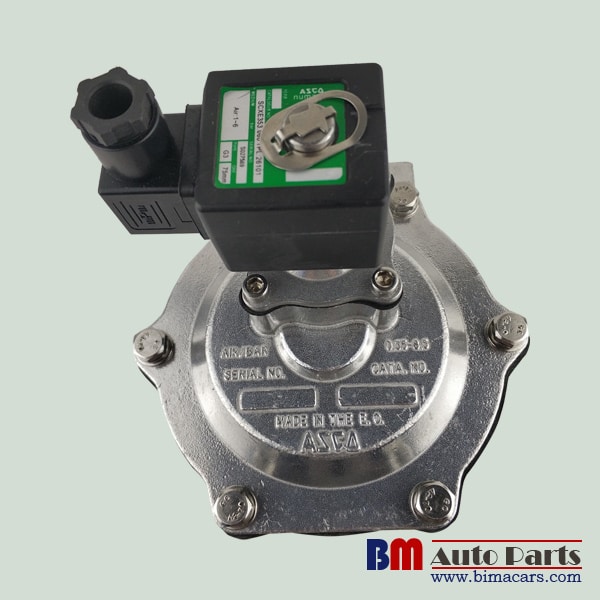
The sudden expansion of compressed air causes the filter media to flex outward. This movement breaks the layer of accumulated dust from the filter surface, allowing the particles to fall into the hopper below while filtration continues uninterrupted.
Because the cleaning cycle lasts only a fraction of a second, production equipment does not need to stop during filter cleaning. This continuous cleaning process makes pulse jet dust collectors the preferred solution for modern industrial filtration systems.
Today, pulse valves have become the standard cleaning component in virtually every high-efficiency baghouse and cartridge dust collection system.
What Does a Pulse Valve Do?
The primary function of a pulse valve is to deliver a powerful pulse of compressed air at precisely controlled intervals.
Each cleaning pulse typically lasts between 50 and 200 milliseconds, depending on the system design and controller settings. Despite its short duration, this pulse contains enough energy to remove large amounts of dust from the filter surface.
The pulse valve performs several important functions:
- Cleans filter bags without stopping production
- Maintains stable airflow through the dust collector
- Reduces pressure drop across the filters
- Improves filtration efficiency
- Minimizes compressed air consumption
- Extends filter bag service life
- Reduces equipment maintenance
- Improves overall dust collector reliability
Without properly functioning pulse valves, dust quickly accumulates on the filters, causing airflow restrictions, increased energy consumption, higher operating costs, and eventually system failure.
Why Pulse Valves Are Essential in Dust Collection Systems
Industrial dust collection systems rely on clean filter media to maintain proper airflow. As production continues, dust particles gradually accumulate on the surface of the filter bags.
If this dust layer is not removed regularly, several problems begin to develop.
Increased Differential Pressure
Dust buildup creates resistance to airflow, increasing the pressure drop across the filters. Fans must work harder to maintain the required airflow, resulting in higher electricity consumption.
Reduced Filtration Efficiency
When filters become heavily loaded with dust, airflow decreases throughout the system. Poor airflow reduces dust capture efficiency and may allow particles to escape into the workplace.
Shortened Filter Bag Life
Excessive dust accumulation forces filter bags to operate under greater mechanical stress. This accelerates wear, leading to premature bag replacement and increased maintenance costs.
Higher Operating Costs
Dirty filters increase energy consumption, compressed air usage, labor costs, and production downtime.
Routine pulse cleaning keeps the entire system operating efficiently while minimizing operating expenses.
Continuous Production
One of the greatest advantages of pulse jet cleaning is that it allows the dust collector to remain online during cleaning cycles.
Instead of shutting down production for manual cleaning, pulse valves automatically clean individual rows of filters in sequence.
This ensures uninterrupted production while maintaining excellent filtration performance.
Why Pulse Jet Cleaning Is More Efficient Than Other Cleaning Methods
Several dust collector cleaning technologies exist, including:
- Mechanical shaking
- Reverse air cleaning
- Pulse jet cleaning
Among these methods, pulse jet cleaning offers the highest cleaning efficiency for most industrial applications.
Mechanical Shaking
Mechanical shaking systems physically vibrate the filter bags to remove dust. Although simple, they usually require the filtration system to stop during cleaning.
Advantages:
- Low initial cost
- Simple construction
Disadvantages:
- Production interruption
- Lower cleaning efficiency
- Higher maintenance
Reverse Air Cleaning
Reverse air systems use low-pressure airflow to reverse the direction of air through the filters.
Advantages:
- Gentle cleaning
- Suitable for some specialty applications
Disadvantages:
- Large equipment size
- Slower cleaning cycle
- Lower cleaning efficiency
Pulse Jet Cleaning
Pulse jet systems use high-pressure compressed air released through pulse valves.
Advantages include:
- Continuous operation
- Highest cleaning efficiency
- Low maintenance
- Compact design
- Reduced operating cost
- Longer filter life
- Excellent automation
These benefits explain why pulse jet dust collectors have become the preferred solution across a wide range of industries.
Industries That Commonly Use Pulse Valves
Because dust generation occurs in many manufacturing environments, pulse valves are widely used across numerous industries.
Some of the most common applications include:
- Cement plants
- Steel manufacturing
- Foundries
- Mining operations
- Power plants
- Chemical processing
- Pharmaceutical production
- Food processing
- Grain handling
- Woodworking
- Paper manufacturing
- Glass production
- Ceramics manufacturing
- Battery production
- Metal fabrication
Each industry relies on pulse valves to maintain high filtration efficiency while minimizing maintenance and operating costs.
Key Takeaways
A pulse valve is much more than a simple pneumatic component. It is the heart of every pulse jet dust collection system, responsible for delivering precise bursts of compressed air that keep filter media clean and production running efficiently.
By ensuring effective filter cleaning, pulse valves help reduce energy consumption, extend filter life, improve system reliability, and support compliance with environmental regulations.
Understanding the role of pulse valves is the first step toward selecting the right valve, maintaining optimal system performance, and reducing long-term operating costs.
How Does a Pulse Valve Work?
Understanding how a pulse valve works is essential for selecting the right valve, diagnosing system problems, and maintaining optimal dust collector performance.
Although the operating cycle lasts only a fraction of a second, a pulse valve coordinates several pneumatic components to generate a powerful cleaning pulse that keeps filter bags operating efficiently.
The cleaning process involves compressed air, the diaphragm, the pilot solenoid valve, and the electronic pulse controller working together in a precisely timed sequence.
Let’s examine the entire operating process step by step.
The Basic Working Principle
A pulse valve converts the energy stored in compressed air into a short, high-pressure pulse.
Instead of allowing air to flow continuously, the valve remains closed under normal operating conditions. When it receives an electrical signal from the pulse controller, the valve opens almost instantly, releasing a burst of compressed air into the blow tube.
The compressed air expands rapidly inside the blow tube and enters the filter bags through specially designed nozzles. This sudden expansion creates a pressure wave that causes the filter bags to flex outward.
As the filter media expands, the layer of dust accumulated on the outside surface breaks away and falls into the hopper below.
Within milliseconds, the diaphragm returns to its original position, sealing the valve and preparing it for the next cleaning cycle.
This entire process is completed without interrupting airflow through the dust collector.
Step 1 — Standby Condition
During normal operation, compressed air from the air receiver continuously fills the pulse valve’s upper chamber.
The pressure above and below the diaphragm remains balanced.
A spring and the equal air pressure hold the diaphragm tightly against the valve seat, preventing compressed air from entering the blow tube.
Meanwhile, dusty process air continues flowing through the filter bags while particles accumulate on the outer surface of the filter media.
The pulse valve remains completely closed until it receives a cleaning signal.
Step 2 — Pulse Controller Sends a Signal
Modern dust collectors use an electronic pulse controller to manage filter cleaning.
The controller continuously monitors system parameters such as:
- Cleaning interval
- Differential pressure
- Sequential valve operation
- Pulse duration
- Rest time between pulses
When cleaning is required, the controller sends a low-voltage electrical signal to the pilot solenoid valve mounted on the pulse valve.
Typical pulse duration ranges from 50 to 200 milliseconds, depending on the dust collector design, filter type, and operating conditions.
Because only one row of filters is cleaned at a time, the remaining filters continue collecting dust without affecting production.
Step 3 — Pilot Solenoid Valve Opens
The pilot solenoid valve is a small electromagnetic valve responsible for controlling the larger diaphragm valve.
When energized, the solenoid lifts its internal plunger, allowing compressed air inside the pilot chamber to escape rapidly.
As air is exhausted from the upper chamber, pressure above the diaphragm drops almost instantly.
At this moment, pressure below the diaphragm becomes higher than the pressure above it.
This pressure imbalance is the key to pulse valve operation.
Unlike manually operated valves, the diaphragm moves automatically due to the pressure difference.
Step 4 — Diaphragm Opens Instantly
Once the pressure differential becomes large enough, the diaphragm lifts away from the valve seat.
The opening action is extremely fast—typically occurring within a few milliseconds.
A large volume of compressed air stored inside the air reservoir is suddenly released through the valve outlet.
The compressed air enters the blow tube at very high velocity.
Because the valve opens completely in a very short time, a strong pressure wave is created instead of continuous airflow.
This pressure wave is what makes pulse jet cleaning so effective.
Step 5 — Compressed Air Enters the Blow Tube
The blow tube distributes compressed air evenly across an entire row of filter bags.
Each blow tube contains precisely positioned nozzles aligned with individual filters.
As compressed air exits these nozzles, surrounding air is entrained into the airflow.
This phenomenon, often referred to as the Venturi effect, increases the total volume of air entering each filter bag.
In many dust collection systems, one unit of compressed air can induce several times its own volume of surrounding air.
This amplification significantly improves cleaning efficiency while reducing compressed air consumption.
Step 6 — Dust Is Removed from the Filter Bags
The sudden influx of air causes each filter bag to expand rapidly.
This expansion generates a shock wave that travels from the top of the bag to the bottom.
The dust cake adhering to the outer surface of the filter media breaks apart and falls into the dust hopper under the influence of gravity.
Unlike continuous airflow, the short, high-energy pulse effectively removes dust without damaging the filter material.
Proper pulse cleaning maintains a thin dust layer that actually enhances filtration while preventing excessive buildup.
Step 7 — The Valve Closes Automatically
Once the pulse controller removes power from the pilot solenoid valve, the pilot exhaust port closes.
Compressed air again fills the upper chamber above the diaphragm.
Pressure on both sides of the diaphragm equalizes.
The return spring pushes the diaphragm back against the valve seat, sealing the valve completely.
The valve immediately returns to standby mode, ready for the next cleaning cycle.
The entire process—from electrical signal to valve closure—typically takes less than 0.2 seconds.
Complete Pulse Valve Operating Cycle
The complete cleaning sequence can be summarized as follows:
- Compressed air is stored in the air manifold.
- The pulse controller sends an electrical signal.
- The pilot solenoid valve opens.
- Pressure above the diaphragm is released.
- The diaphragm lifts from the valve seat.
- High-pressure compressed air flows into the blow tube.
- Air enters the filter bags through Venturi nozzles.
- Dust is dislodged from the filter media.
- The pulse ends.
- The diaphragm reseals the valve.
- The controller activates the next pulse valve in sequence.
This sequential operation allows the dust collector to maintain continuous filtration while cleaning one row of filters at a time.
Why Fast Response Time Matters
One of the defining characteristics of a high-quality pulse valve is its rapid response time.
A valve that opens too slowly or fails to close quickly can lead to several problems:
- Reduced cleaning efficiency
- Excessive compressed air consumption
- Incomplete dust removal
- Increased differential pressure
- Premature filter wear
- Higher operating costs
For this reason, industrial pulse valves are designed with lightweight diaphragms, optimized airflow paths, and precisely engineered pilot systems to ensure consistent performance over millions of operating cycles.
Factors Affecting Pulse Valve Performance
Even with a well-designed valve, system performance depends on several operating conditions:
Compressed Air Pressure
Most pulse valves operate efficiently within a pressure range of 0.3–0.8 MPa (3–8 bar). Insufficient pressure can produce weak cleaning pulses, while excessive pressure may shorten diaphragm life.
Air Quality
Compressed air should be clean, dry, and free from oil contamination. Moisture and debris can damage diaphragms, clog pilot passages, and reduce valve reliability.
Pulse Duration
Longer pulses consume more compressed air but do not always improve cleaning performance. The optimal pulse duration depends on the filter media, dust characteristics, and system design.
Cleaning Frequency
Cleaning too frequently wastes compressed air and accelerates diaphragm wear. Cleaning too infrequently allows excessive dust accumulation, increasing system resistance.
Proper controller settings help balance cleaning efficiency with energy consumption.
Main Components of a Pulse Valve
Although pulse valves are available in different sizes and configurations, most industrial pulse valves share the same fundamental components. Each component plays a specific role in ensuring fast response, reliable sealing, and efficient compressed air discharge.
Understanding these components helps maintenance personnel diagnose problems more quickly and enables buyers to choose valves with higher durability and lower lifecycle costs.
1. Valve Body
The valve body forms the main structural housing of the pulse valve. It contains the internal airflow passages, supports the diaphragm assembly, and connects the compressed air supply to the blow tube.
Since the valve body is continuously exposed to compressed air pressure and industrial environments, its material directly affects durability and corrosion resistance.
Common materials include:
- Aluminum alloy (lightweight, corrosion-resistant, widely used)
- Die-cast aluminum
- Stainless steel (for corrosive or hygienic environments)
- Engineering plastics (for certain low-pressure applications)
High-quality valve bodies feature precision-machined sealing surfaces and smooth internal flow channels to minimize airflow resistance and maximize pulse efficiency.
2. Diaphragm
The diaphragm is the most important wearing component inside a pulse valve.
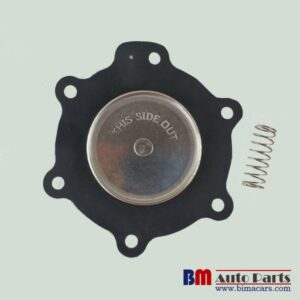
It acts as a flexible seal, separating the upper control chamber from the lower air chamber. During each cleaning cycle, the diaphragm rapidly lifts and reseals, controlling the release of compressed air.
Because the diaphragm opens and closes thousands—or even millions—of times during its service life, its material quality directly determines valve reliability.
Common diaphragm materials include:
- NBR (Nitrile Rubber) – excellent oil resistance, widely used
- EPDM – suitable for humid and outdoor environments
- FKM (Viton®) – ideal for high-temperature or chemical applications
- Silicone – used in food and pharmaceutical industries
A damaged diaphragm may cause:
- Continuous air leakage
- Weak cleaning pulses
- Failure to open
- Failure to close
- Increased compressed air consumption
For this reason, many maintenance programs replace only the diaphragm using a pulse valve repair kit, rather than replacing the entire valve.
3. Pilot Solenoid Valve
The pilot solenoid valve is the electrical control unit of the pulse valve.
Although it is much smaller than the main valve body, it determines when the diaphragm opens and closes.
When the pulse controller energizes the solenoid coil, the pilot valve releases pressure from the upper chamber. This pressure difference allows the diaphragm to open almost instantly.
High-quality pilot valves offer:
- Fast switching speed
- Low power consumption
- Stable performance
- Long operating life
- Reliable sealing
Because pilot valves operate frequently, selecting high-quality coils and internal components is essential for long-term reliability.
4. Solenoid Coil
The solenoid coil converts electrical energy into magnetic force.
When energized, it pulls the plunger upward, opening the pilot valve.
Industrial pulse valves are available with various coil voltages, including:
- 24V DC
- 24V AC
- 110V AC
- 220V AC
- 230V AC
Choosing the correct voltage ensures compatibility with the pulse controller and prevents premature coil failure.
5. Spring
The return spring assists the diaphragm in resealing after each cleaning pulse.
Although compressed air pressure performs most of the work, the spring ensures rapid and consistent closure.
A high-quality stainless steel spring offers:
- Excellent fatigue resistance
- Stable elasticity
- Long service life
- Reliable valve closing
A weakened spring may result in delayed valve closure or minor air leakage.
6. Air Chamber
The air chamber stores compressed air immediately before each cleaning cycle.
Its volume directly affects the energy available during the pulse.
A properly designed air chamber ensures:
- Rapid pressure release
- Uniform airflow
- Stable pulse intensity
- Efficient filter cleaning
7. Fasteners and Seals
Small components such as screws, O-rings, sealing washers, and gaskets also contribute to valve reliability.
Although inexpensive, poor-quality seals often become the first source of compressed air leakage.
Regular inspection of these components helps prevent unexpected downtime.
How These Components Work Together
The following table summarizes the role of each component:
| Component | Primary Function |
|---|---|
| Valve Body | Directs compressed airflow |
| Diaphragm | Opens and closes the main air passage |
| Pilot Valve | Controls diaphragm operation |
| Solenoid Coil | Receives electrical signals |
| Spring | Returns diaphragm to closed position |
| Air Chamber | Stores compressed air |
| Seals & O-rings | Prevent air leakage |
All components must function correctly to produce a powerful and consistent cleaning pulse.
Types of Pulse Valves
Different dust collection systems require different pulse valve designs. Manufacturers offer several configurations to accommodate installation space, airflow requirements, and piping layouts.
The most common types are described below.
1. Right Angle Pulse Valve
The right angle pulse valve is the most widely used design in industrial dust collection systems.
The inlet and outlet are positioned at a 90-degree angle, allowing compressed air to change direction before entering the blow tube.
Advantages
- Compact installation
- Excellent airflow performance
- Easy maintenance
- Suitable for most baghouse systems
- Large selection of sizes
Typical Applications
- Cement plants
- Steel mills
- Foundries
- Chemical plants
- General industrial dust collectors
2. Straight Through Pulse Valve
A straight-through pulse valve allows compressed air to travel in a straight line from inlet to outlet.
Because airflow changes direction very little, pressure loss is minimized.
Advantages
- Lower airflow resistance
- Higher flow capacity
- Suitable for large systems
- Improved cleaning efficiency
Applications
- High-airflow dust collectors
- Large industrial filtration systems
- Power plants
- Mining operations
3. Submerged Pulse Valve
Submerged pulse valves are mounted directly inside the compressed air manifold.
Only the outlet extends into the blow tube.
This design shortens the airflow path and reduces pressure losses.
Advantages
- Very fast response
- Reduced pressure drop
- Compact installation
- High cleaning efficiency
- Quiet operation
Common Industries
- Large baghouse filters
- Cement plants
- Power generation
- Steel production
4. Threaded Pulse Valve
Threaded pulse valves use threaded pipe connections.
They are commonly found in small and medium-sized dust collection systems.
Advantages
- Easy installation
- Simple replacement
- Lower installation cost
5. Flanged Pulse Valve
Flanged pulse valves use flange connections for larger pipe diameters.
They are generally installed in high-capacity industrial systems.
Advantages
- High mechanical strength
- Excellent sealing
- Suitable for high-flow applications
Comparison of Different Pulse Valve Types
| Type | Airflow Capacity | Installation | Typical Use |
|---|---|---|---|
| Right Angle | High | Easy | General industrial dust collectors |
| Straight Through | Very High | Medium | Large airflow systems |
| Submerged | Very High | Compact | Large baghouses |
| Threaded | Medium | Very Easy | Small to medium collectors |
| Flanged | High | Heavy-duty | Large industrial plants |
Which Type Should You Choose?
Selecting the right pulse valve depends on several factors:
- Dust collector design
- Available installation space
- Compressed air pressure
- Required airflow capacity
- Pipe connection type
- Maintenance accessibility
- Operating environment
- Temperature and humidity
- Chemical exposure
- Budget and lifecycle cost
Rather than choosing solely based on price, engineers should evaluate the total cost of ownership, including energy efficiency, maintenance frequency, spare parts availability, and expected service life.
Expert Tip
For most industrial baghouse dust collectors, right angle pulse valves provide the best balance of performance, reliability, and ease of maintenance. However, submerged pulse valves are often the preferred choice for high-capacity systems where minimizing pressure loss and maximizing cleaning efficiency are critical.
Pulse Valve Specifications, Applications & Key Benefits
Selecting the right pulse valve involves much more than simply matching the pipe size. Engineers must evaluate operating pressure, airflow capacity, diaphragm material, environmental conditions, and system compatibility to ensure reliable performance over the valve’s entire service life.
A well-selected pulse valve improves dust collector efficiency, reduces compressed air consumption, and minimizes maintenance costs. Conversely, an incorrectly specified valve can lead to poor cleaning performance, excessive energy use, and premature component failure.
This section explains the key technical specifications, common industrial applications, and major advantages of industrial pulse valves.
Key Technical Specifications
Understanding the technical specifications of a pulse valve is essential when selecting a replacement or designing a new dust collection system.
1. Port Size
The port size determines how much compressed air can flow through the valve during each cleaning pulse.
Common sizes include:
- 3/4″
- 1″
- 1½”
- 2″
- 2½”
- 3″
Larger dust collectors generally require larger valves to deliver sufficient cleaning energy.
When selecting a valve, ensure the port size matches both the compressed air manifold and the blow tube.
2. Operating Pressure
Most industrial pulse valves are designed to operate within the following pressure range:
Working Pressure
- 0.3 MPa to 0.8 MPa
- 3–8 bar
- 45–120 PSI
Operating below the recommended pressure may produce weak cleaning pulses, while excessive pressure increases diaphragm wear and compressed air consumption.
Maintaining stable air pressure is one of the simplest ways to improve valve performance and extend service life.
3. Operating Temperature
Different diaphragm materials support different temperature ranges.
Typical operating temperatures are:
| Diaphragm Material | Temperature Range |
|---|---|
| NBR | -20°C to +80°C |
| EPDM | -30°C to +120°C |
| FKM (Viton®) | -20°C to +200°C |
| Silicone | -40°C to +180°C |
Choosing the appropriate diaphragm material is especially important for applications involving high temperatures, humidity, chemicals, or food-grade environments.
4. Response Time
Pulse valves are designed for extremely rapid operation.
Typical opening time:
Less than 20 milliseconds
Typical pulse duration:
50–200 milliseconds
Fast response ensures the compressed air pulse reaches maximum intensity before pressure dissipates.
5. Flow Capacity (Cv Value)
Flow capacity determines the amount of compressed air discharged during each cleaning cycle.
A higher flow coefficient (Cv) generally provides:
- Stronger cleaning pulses
- Better filter cleaning
- Lower pressure loss
- Improved dust removal
However, selecting an oversized valve may unnecessarily increase compressed air consumption.
6. Service Life
High-quality industrial pulse valves are designed for millions of operating cycles.
Typical diaphragm life:
- 500,000–1,000,000 cycles (standard quality)
- 1–3 million cycles (premium quality, depending on operating conditions)
Routine inspection and timely replacement of diaphragms can significantly extend the overall service life of the valve body.
Common Industrial Applications
Pulse valves are used wherever pulse jet dust collection systems require efficient and reliable filter cleaning.
Below are some of the most common industries.
Cement Industry
Cement manufacturing generates large volumes of fine dust during crushing, conveying, grinding, and packaging.
Pulse valves help maintain continuous operation of baghouse dust collectors by preventing excessive dust accumulation on filter bags.
Typical equipment includes:
- Cement mills
- Rotary kilns
- Clinker coolers
- Packing systems
- Bulk loading stations
Steel and Metallurgy
Steel production produces metal dust, scale, and fumes throughout the manufacturing process.
Pulse valves are widely used on dust collectors serving:
- Electric arc furnaces
- Blast furnaces
- Sinter plants
- Rolling mills
- Shot blasting systems
Reliable pulse cleaning helps protect equipment while maintaining compliance with environmental regulations.
Power Generation
Coal-fired and biomass power plants rely on pulse jet dust collectors to capture fly ash and other particulates.
Pulse valves provide continuous cleaning without interrupting plant operations, contributing to stable boiler performance and lower maintenance costs.
Chemical Industry
Chemical plants often handle abrasive, corrosive, or hazardous powders.
Selecting the correct valve body material and diaphragm material is essential to ensure long-term reliability under these demanding conditions.
Food Processing
Dust generated from flour, sugar, starch, spices, and powdered ingredients can affect both product quality and workplace safety.
Food-grade pulse valves are commonly used in:
- Flour mills
- Sugar plants
- Feed mills
- Grain handling facilities
Materials must comply with hygiene standards, and clean compressed air is particularly important.
Pharmaceutical Manufacturing
Pharmaceutical production requires clean, contamination-free environments.
Pulse valves help maintain efficient filtration in processes involving powders and active ingredients while minimizing the risk of cross-contamination.
Woodworking Industry
Wood dust presents both health and fire hazards.
Pulse jet dust collectors equipped with reliable pulse valves are commonly installed in:
- Furniture factories
- MDF production
- Sawmills
- Cabinet manufacturing
- Wood sanding systems
Mining and Minerals
Mining operations generate large quantities of abrasive dust.
Heavy-duty pulse valves are used to clean filters in:
- Crushing plants
- Screening systems
- Conveying equipment
- Ore processing facilities
Durable valve construction is essential in these harsh environments.
Benefits of Using High-Quality Pulse Valves
While all pulse valves perform the same basic function, high-quality products offer significant long-term advantages.
1. Improved Cleaning Efficiency
Fast-opening diaphragms deliver powerful compressed air pulses that remove dust more effectively.
Cleaner filters maintain higher airflow and better filtration performance.
2. Lower Compressed Air Consumption
Efficient airflow design allows the valve to deliver maximum cleaning energy using less compressed air.
Since compressed air is one of the most expensive utilities in manufacturing, even small efficiency improvements can significantly reduce operating costs.
3. Longer Filter Bag Life
Consistent cleaning prevents excessive dust buildup and reduces mechanical stress on filter bags.
This extends filter service life and lowers replacement costs.
4. Reduced Maintenance
High-quality diaphragms, precision-machined valve bodies, and reliable pilot valves reduce unplanned maintenance and downtime.
Replacing diaphragms with compatible repair kits at scheduled intervals further lowers maintenance expenses.
5. Higher System Reliability
Reliable pulse valves ensure stable operation of the dust collection system, reducing the risk of production interruptions caused by clogged filters or valve failures.
6. Lower Total Cost of Ownership
Although premium pulse valves may have a higher initial purchase price, they often deliver a lower total cost of ownership due to:
- Longer service life
- Reduced maintenance
- Lower compressed air usage
- Improved energy efficiency
- Fewer production interruptions
When evaluating suppliers, consider lifecycle cost rather than purchase price alone.
How to Choose the Correct Pulse Valve
Selecting the right pulse valve requires balancing technical requirements with operating conditions.
Before purchasing, consider the following:
- Dust collector type
- Air manifold pressure
- Pipe connection size
- Flow capacity requirements
- Installation space
- Operating temperature
- Dust characteristics
- Diaphragm material
- Control voltage
- Availability of replacement repair kits
It is also advisable to verify that spare diaphragms and repair kits are readily available, as this simplifies future maintenance and minimizes downtime.
Common Selection Mistakes
Avoid these common mistakes when choosing a pulse valve:
- Selecting based only on price
- Ignoring operating pressure requirements
- Using incompatible diaphragm materials
- Choosing the wrong port size
- Overlooking spare parts availability
- Purchasing valves without reliable technical support
Careful selection helps maximize the performance and lifespan of the entire dust collection system.
Common Pulse Valve Problems, Troubleshooting & Maintenance Guide
Even the highest-quality pulse valve requires regular inspection and maintenance to ensure long-term reliability. Because pulse valves operate thousands of times every day in demanding industrial environments, normal wear is unavoidable.
Fortunately, most common problems can be identified and corrected before they lead to system failure or production downtime.
This section explains the most frequent pulse valve issues, their possible causes, troubleshooting methods, and preventive maintenance practices.
Common Pulse Valve Problems
1. Continuous Air Leakage
Continuous air leakage is one of the most common symptoms of pulse valve failure. Instead of releasing a short burst of compressed air, the valve allows air to escape continuously, increasing compressed air consumption and reducing cleaning efficiency.
Possible Causes
- Worn or damaged diaphragm
- Dirt or debris on the valve seat
- Damaged O-rings or seals
- Weak return spring
- Scratched sealing surface
Recommended Solutions
- Inspect the diaphragm for cracks, deformation, or wear.
- Clean the valve seat thoroughly.
- Replace damaged seals and O-rings.
- Install a compatible pulse valve repair kit if the diaphragm has reached the end of its service life.
2. Valve Does Not Open
A pulse valve that fails to open cannot deliver the compressed air pulse required to clean the filter bags.
Possible Causes
- No electrical signal from the pulse controller
- Burned-out solenoid coil
- Blocked pilot valve
- Insufficient compressed air pressure
- Sticking diaphragm
Troubleshooting Steps
- Verify that the pulse controller is sending an output signal.
- Measure the coil voltage with a multimeter.
- Listen for the clicking sound when the solenoid is energized.
- Inspect the pilot valve for contamination.
- Check system air pressure.
- Replace defective components if necessary.
3. Weak Cleaning Pulse
Sometimes the valve opens, but the cleaning pulse is too weak to remove accumulated dust effectively.
Possible Causes
- Low compressed air pressure
- Partially blocked blow tube
- Damaged diaphragm
- Incorrect pulse duration
- Air leakage in the compressed air manifold
Recommended Solutions
- Verify operating pressure.
- Clean the blow tube and nozzles.
- Inspect the diaphragm.
- Adjust pulse controller settings.
- Repair any air leaks.
4. Valve Does Not Close Properly
If the valve remains partially open after the cleaning cycle, compressed air continues to leak into the blow tube.
Possible Causes
- Diaphragm damage
- Pilot valve malfunction
- Broken spring
- Dirt trapped on the sealing surface
Corrective Actions
- Clean internal components.
- Replace worn diaphragms.
- Inspect the spring.
- Replace damaged pilot valve components.
5. Excessive Diaphragm Wear
The diaphragm is designed as a replaceable wear component. However, premature failure often indicates operating problems rather than poor material quality.
Common Causes
- Excessive operating pressure
- Oil-contaminated compressed air
- Moisture inside the air system
- Excessive cleaning frequency
- Improper diaphragm installation
Correcting these issues can significantly extend diaphragm service life.
Pulse Valve Troubleshooting Guide
The following table summarizes common symptoms and recommended corrective actions.
| Problem | Possible Cause | Recommended Solution |
|---|---|---|
| Continuous air leakage | Damaged diaphragm | Replace diaphragm or repair kit |
| Valve does not open | Faulty solenoid or controller | Check electrical system |
| Weak pulse | Low air pressure | Adjust compressed air supply |
| Valve does not close | Worn diaphragm or spring | Replace damaged parts |
| High compressed air consumption | Air leakage | Inspect seals and valve seat |
| Poor dust cleaning | Incorrect pulse timing | Optimize controller settings |
This troubleshooting approach helps maintenance personnel identify problems quickly and reduce system downtime.
Preventive Maintenance Best Practices
Preventive maintenance is far more cost-effective than emergency repairs. A structured maintenance program helps maximize valve life and maintain consistent dust collector performance.
Daily Inspection
Operators should perform a quick visual inspection during routine equipment checks.
Daily tasks include:
- Listen for abnormal air leakage.
- Observe the pulse cleaning sequence.
- Check compressed air pressure.
- Verify controller operation.
- Inspect for loose electrical connections.
These simple checks often detect problems before they become serious.
Weekly Inspection
Once a week, maintenance personnel should perform a more detailed inspection.
Recommended tasks:
- Inspect pilot valves.
- Check blow tube alignment.
- Inspect air piping for leaks.
- Verify pulse timing.
- Confirm all valves operate correctly.
Monthly Inspection
Monthly inspections should include:
- Clean pilot valve passages.
- Tighten mounting bolts.
- Inspect electrical wiring.
- Check diaphragm condition.
- Clean air filters.
- Verify pressure gauges.
Annual Maintenance
At least once per year, a comprehensive inspection should be performed.
Typical annual maintenance includes:
- Replace worn diaphragms.
- Replace damaged seals.
- Clean valve bodies.
- Test solenoid coils.
- Inspect air manifolds.
- Calibrate the pulse controller if necessary.
Plants operating in harsh environments may require more frequent servicing.
When Should a Diaphragm Be Replaced?
A diaphragm should be replaced immediately if any of the following symptoms are observed:
- Visible cracks
- Surface hardening
- Permanent deformation
- Continuous air leakage
- Reduced cleaning performance
- Difficulty opening or closing
Waiting until complete failure often results in higher maintenance costs and unexpected downtime.
Replacing the diaphragm during scheduled maintenance is generally the most economical approach.
Repair Kit vs. Replacing the Entire Pulse Valve
Many maintenance teams face the question of whether to replace only the repair kit or the complete pulse valve.
The answer depends on the condition of the valve body and internal components.
Replace the Repair Kit When:
- The valve body is in good condition.
- Only the diaphragm or seals are worn.
- There is no corrosion or mechanical damage.
- Airflow performance remains normal.
Replacing a repair kit is typically faster and more cost-effective than replacing the entire valve.
Replace the Entire Valve When:
- The valve body is cracked or severely corroded.
- Internal surfaces are damaged.
- Threaded or flanged connections are worn.
- Multiple components have failed simultaneously.
- The valve has reached the end of its expected service life.
A full valve replacement may reduce future maintenance costs in these situations.
Maintenance Tips to Extend Pulse Valve Life
Proper operating practices can significantly increase the service life of pulse valves.
Consider the following recommendations:
- Use clean, dry, oil-free compressed air.
- Maintain the recommended operating pressure.
- Replace diaphragms before complete failure.
- Keep pilot passages free of contamination.
- Inspect valves regularly.
- Use genuine or high-quality compatible repair kits.
- Avoid unnecessary pulse frequency.
- Train maintenance personnel on proper installation procedures.
Implementing these practices helps improve reliability while reducing long-term operating costs.
Expert Maintenance Checklist
Use this checklist as part of your preventive maintenance program:
- ✔ Check compressed air pressure.
- ✔ Inspect for air leaks.
- ✔ Verify pulse controller settings.
- ✔ Test solenoid coil operation.
- ✔ Clean pilot valve passages.
- ✔ Inspect diaphragms for wear.
- ✔ Tighten mounting hardware.
- ✔ Replace worn seals.
- ✔ Record maintenance history.
- ✔ Keep spare repair kits in inventory.
A documented maintenance schedule not only improves equipment reliability but also supports predictive maintenance strategies.
Frequently Asked Questions (FAQ)
1. What is the primary function of a pulse valve?
A pulse valve is designed to release a short, high-pressure burst of compressed air into a dust collector’s blow tube. This air pulse removes accumulated dust from filter bags or filter cartridges, helping maintain stable airflow and efficient filtration without interrupting production.
2. How long does a pulse valve last?
The lifespan of a pulse valve depends on operating conditions, compressed air quality, and maintenance practices.
A high-quality industrial pulse valve can typically operate for millions of cycles, while diaphragms generally require replacement after extended use as part of routine preventive maintenance.
3. What causes a pulse valve diaphragm to fail?
Common causes include:
- Natural wear
- Excessive operating pressure
- Moisture in compressed air
- Oil contamination
- Chemical attack
- Incorrect installation
- Excessive cleaning frequency
Routine inspection and timely replacement can significantly extend valve performance.
4. Can I replace only the diaphragm instead of the entire valve?
Yes.
In most cases, if the valve body and pilot assembly remain in good condition, replacing the diaphragm using a compatible pulse valve repair kit is the most economical solution.
5. How often should a pulse valve be inspected?
A visual inspection is recommended during routine equipment checks, while a more detailed inspection should be performed monthly or according to the operating conditions of the dust collection system.
Facilities operating continuously or in harsh environments may require more frequent maintenance.
6. What operating pressure is recommended?
Most industrial pulse valves perform best between 0.3 MPa and 0.8 MPa (3–8 bar).
Always follow the manufacturer’s specifications for your particular model.
7. Which diaphragm material should I choose?
The appropriate diaphragm material depends on the operating environment.
- NBR: General industrial applications
- EPDM: Moist or outdoor environments
- FKM (Viton®): High-temperature or chemically aggressive environments
- Silicone: Food and pharmaceutical applications
Selecting the correct material improves both reliability and service life.
8. Why is my pulse valve leaking compressed air?
Continuous air leakage is usually caused by:
- A damaged diaphragm
- Worn seals or O-rings
- Dirt on the valve seat
- A faulty pilot valve
- A weakened return spring
Inspecting and replacing worn components promptly can restore proper sealing.
9. How do I choose the correct pulse valve?
Key selection factors include:
- Valve size
- Airflow requirements
- Working pressure
- Connection type
- Operating temperature
- Diaphragm material
- Dust collector configuration
- Availability of replacement repair kits
Consulting the valve specifications and matching them to your dust collection system is essential for optimal performance.
10. Why are high-quality repair kits important?
A high-quality repair kit restores sealing performance and extends the service life of the existing valve.
Using compatible diaphragms and precision-manufactured components helps reduce air leakage, improve cleaning efficiency, and minimize maintenance costs.
Conclusion
Pulse valves are one of the most important components in any pulse jet dust collection system. Although compact in size, they play a critical role in maintaining filter cleanliness, reducing system pressure drop, improving energy efficiency, and ensuring uninterrupted industrial production.
Throughout this guide, we have explored the working principle of pulse valves, their major components, common valve types, technical specifications, industrial applications, troubleshooting methods, maintenance practices, and selection considerations.
By understanding how pulse valves operate and implementing a preventive maintenance strategy, manufacturers can extend equipment life, reduce compressed air consumption, minimize downtime, and lower overall operating costs.
Whether you are designing a new dust collection system, replacing an existing valve, or selecting a compatible repair kit, choosing high-quality products and performing regular maintenance will ensure long-term system reliability and consistent filtration performance.