
Introduction
An ASCO pulse valve repair kit is used to restore the internal operating components of a compatible pulse valve without necessarily replacing the complete valve assembly. In industrial dust collection systems, this can be an efficient maintenance option when the valve body remains in good condition but the diaphragm, seals, or other internal components have reached the end of their service life.
The diaphragm is particularly important because it repeatedly opens and closes as the dust collector releases compressed-air cleaning pulses. Over time, pressure cycling, contaminated compressed air, excessive pulse frequency, temperature, and other operating conditions can cause the diaphragm to lose its flexibility or sealing performance.
For maintenance departments, selecting the correct repair kit is therefore more important than simply choosing a diaphragm that looks similar to the original. The valve model, diaphragm construction, dimensions, material, and kit contents should all be verified before installation.
This guide explains how an ASCO pulse valve repair kit works, when it should be used, how to identify the correct diaphragm, and what maintenance teams should check before ordering replacement parts.
What Is an ASCO Pulse Valve Repair Kit?
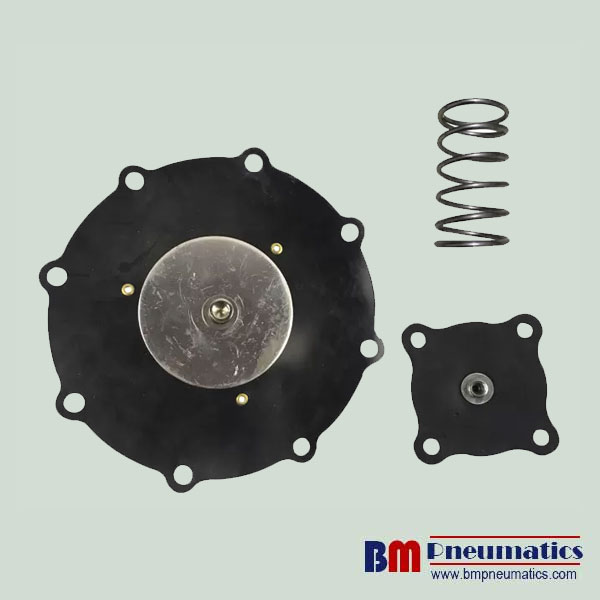
An ASCO pulse valve repair kit is a set of replacement components intended to restore a compatible pulse valve after internal wear has occurred.
Depending on the valve design and repair kit specification, the package may contain a main diaphragm together with pilot diaphragms, O-rings, springs, seals, or other components required for rebuilding the valve.
The exact contents are not necessarily identical between different valve models, so maintenance teams should always confirm the applicable model and kit configuration rather than assuming that every ASCO repair kit contains the same parts.
For dust collector applications, the main purpose of the repair is to restore reliable opening and closing of the valve so that each cleaning cycle can deliver the required compressed-air pulse.
Why Does an ASCO Pulse Valve Need a Repair Kit?
Pulse valves operate under repetitive cycling conditions. A valve installed on a continuously operating dust collector may perform a large number of cleaning cycles over its service life, and the diaphragm is exposed to mechanical movement and pressure changes during each cycle.
As the diaphragm ages, its flexibility and sealing characteristics can gradually deteriorate. Once this happens, the valve may begin consuming compressed air continuously or fail to produce a sufficiently strong cleaning pulse.
A repair kit can address these problems when the valve body and other major components remain serviceable. Instead of replacing the complete valve, maintenance personnel can replace the worn internal parts and return the existing valve to normal operating condition.
ASCO Pulse Valve Diaphragm: The Most Important Wear Component
The diaphragm controls the main compressed-air passage inside a pulse valve. During normal operation, pressure in the control chamber keeps the valve closed; when the pilot system is activated, the pressure balance changes and allows the diaphragm to move rapidly.
This repeated movement is essential to pulse cleaning, but it also makes the diaphragm a consumable component.
A deteriorated ASCO pulse valve diaphragm may show one or more of the following conditions:
- Surface cracking
- Hardening
- Loss of flexibility
- Tearing around the sealing area
- Permanent deformation
- Incomplete closing
- Air leakage during standby
A visual inspection can provide useful information, although compatibility and operating performance should also be considered when deciding whether replacement is necessary.
Common Symptoms of a Failed ASCO Pulse Valve Diaphragm
Continuous Compressed-Air Leakage
One of the clearest indications of diaphragm deterioration is air leakage when the valve should be closed. A small amount of leakage may initially go unnoticed, but several leaking valves can create a significant additional load on the plant’s compressed-air system.
Weak Cleaning Pulses
If the valve does not open fully or the diaphragm does not move correctly, the cleaning pulse may not contain enough compressed air to remove the accumulated dust from the filter media.
This can eventually contribute to increasing differential pressure across the dust collector.
Increased Differential Pressure
A damaged diaphragm is not always the only possible cause of poor cleaning performance, but persistent high differential pressure can be a reason to investigate the pulse valve system, including the diaphragm, pilot valve, compressed-air supply, and blow tube.
Irregular Valve Operation
A valve that opens inconsistently, responds slowly, or occasionally fails to close should be inspected before the problem affects a larger number of cleaning cycles.
How to Identify the Correct ASCO Pulse Valve Repair Kit
Correct identification is the most important step before purchasing a repair kit.
Start With the Valve Model
The complete valve model should be recorded from the existing equipment whenever possible. Avoid selecting a kit based only on the brand name or general valve size because different models can use different internal components.
If the original documentation is unavailable, the valve itself should be inspected for model markings and dimensional information.
Check the Valve Size and Configuration
The port size and mechanical configuration provide additional information about compatibility. The replacement diaphragm must fit the valve body and sealing geometry correctly; a difference of only a few millimeters in a critical area can prevent proper operation.
Compare the Existing Diaphragm
If a used diaphragm is available for inspection, compare its:
- Outside diameter
- Center opening
- Thickness
- Sealing edge
- Reinforcement structure
- Overall profile
Dimensions should be treated as supporting information rather than a replacement for model identification.
Confirm the Kit Contents
Some repair kits are designed as complete rebuild sets, while others may contain only specific replacement components. Before ordering, verify whether the kit includes the main diaphragm, pilot diaphragm, O-rings, seals, springs, or other components required for the intended repair.
ASCO Diaphragm Material Selection
The diaphragm material should be selected according to the actual operating environment rather than simply choosing the most commonly used option.
Temperature, humidity, compressed-air quality, chemical exposure, and pulse frequency can all influence diaphragm performance.
NBR Diaphragm
NBR is widely used in general industrial applications because it provides a useful combination of flexibility, mechanical strength, and resistance to many common operating conditions.
For a standard dust collector operating under normal conditions, NBR can be an appropriate choice when it is specified for the particular valve.
EPDM Diaphragm
EPDM provides good resistance to water, weathering, and ozone, which can make it suitable for certain humid or outdoor environments.
However, chemical compatibility should be checked before selecting EPDM for a specific process.
FKM Diaphragm
FKM is commonly considered when improved resistance to elevated temperatures or certain chemicals is required.
The material should still be selected according to the actual operating conditions and the valve manufacturer’s compatibility requirements.
ASCO Repair Kit vs Complete Pulse Valve Replacement
Replacing the diaphragm is not always the best solution. The condition of the valve body should be evaluated before deciding between a repair kit and a complete replacement.
A repair kit is generally worth considering when the valve body is structurally sound and the problem is limited to wear of the diaphragm, seals, or other serviceable internal components.
A complete valve may be more appropriate when the body is cracked, severely corroded, mechanically damaged, or affected by multiple failures that make rebuilding uneconomical.
This distinction is particularly important for large dust collectors because a maintenance team may be dealing with dozens or hundreds of pulse valves. Repairing serviceable valve bodies can reduce replacement costs and simplify spare-parts management.
How to Replace an ASCO Pulse Valve Diaphragm
Before opening the valve, the compressed-air supply must be isolated and residual pressure released. Electrical power to the solenoid should also be disconnected so that the valve cannot be activated accidentally during maintenance.
Once the valve has been made safe, remove the cover and carefully inspect the original diaphragm and internal components. This is a good opportunity to look for contamination, corrosion, damaged sealing surfaces, or other conditions that may have contributed to premature failure.
Remove the old diaphragm and clean the relevant sealing surfaces before installing the replacement. The new diaphragm must be positioned correctly and seated evenly; improper installation can cause leakage even when the replacement component itself is undamaged.
If the repair kit includes O-rings, springs, pilot diaphragms, or other components, replace them according to the applicable valve design. After reassembly, tighten the fasteners evenly and restore the compressed-air supply gradually.
The repaired valve should then be tested for opening response, closing performance, pulse strength, and leakage before the dust collector is returned to normal operation.
Common Problems After Installing a New Diaphragm
Replacing a diaphragm does not automatically guarantee that the pulse valve will operate correctly.
The Valve Still Leaks
If leakage continues after installation, check whether the diaphragm is correctly positioned and whether the sealing surfaces are clean. An incorrect diaphragm, damaged valve seat, contamination, or pilot problem can also produce similar symptoms.
The Cleaning Pulse Remains Weak
A weak pulse may be caused by insufficient compressed-air pressure, restricted airflow, an incorrectly positioned blow tube, an unsuitable valve configuration, or a problem in the pilot system rather than the diaphragm itself.
The Valve Does Not Open
When the valve does not respond after repair, check the electrical signal, coil voltage, solenoid, pilot mechanism, and compressed-air supply before removing the diaphragm again.
The Valve Opens but Does Not Close Properly
A diaphragm that is incorrectly installed or damaged during assembly may prevent proper closing. Contamination around the sealing surface can produce the same symptom.
The Role of Compressed-Air Quality
The condition of the compressed-air supply has a direct effect on pulse valve service life.
Moisture, oil, dust, rust particles, and other contaminants can enter the valve and interfere with the pilot mechanism or damage the diaphragm. For this reason, maintaining the air treatment system is an important part of pulse valve maintenance rather than a separate issue.
Where applicable, maintenance teams should inspect filters, separators, dryers, drains, and other compressed-air treatment components as part of their regular dust collector maintenance program.
How to Extend ASCO Pulse Valve Diaphragm Life
A diaphragm generally lasts longer when the valve operates under stable conditions and receives clean compressed air.
Avoid unnecessarily high pulse frequency because every cleaning cycle creates another mechanical movement of the diaphragm. At the same time, the cleaning sequence should be adjusted according to actual filter loading rather than simply reducing the number of pulses.
Regularly checking for air leakage is also valuable. A valve that begins leaking can often be repaired before the problem develops into significant compressed-air waste or poor filter cleaning.
For facilities with multiple dust collectors, maintaining a reasonable stock of commonly used ASCO pulse valve repair kits can further reduce downtime because maintenance personnel do not need to wait for replacement components after a diaphragm failure.
ASCO Pulse Valve Repair Kit for Preventive Maintenance
Repair kits are particularly useful for plants where dust collectors operate continuously and unexpected downtime can affect production.
Instead of waiting until a valve fails completely, maintenance teams can inspect valves during planned shutdowns and replace diaphragms or seals showing clear signs of deterioration.
This approach also makes spare-parts planning easier. Rather than keeping a large quantity of complete pulse valves in stock, a facility may be able to maintain selected repair kits for the valve models most commonly installed on its dust collectors.
The appropriate strategy depends on the number of valves in service, operating conditions, maintenance capability, and the availability of replacement components.
Frequently Asked Questions
What is an ASCO pulse valve repair kit?
An ASCO pulse valve repair kit is a set of replacement components designed to restore a compatible pulse valve. Depending on the specific model, it may contain a diaphragm, seals, O-rings, springs, pilot components, or other internal parts.
When should an ASCO pulse valve diaphragm be replaced?
Replacement should be considered when the diaphragm shows physical deterioration, causes continuous leakage, produces weak or inconsistent cleaning pulses, or no longer provides reliable sealing.
Can I replace only the ASCO diaphragm?
Yes, provided that the valve body, valve seat, pilot mechanism, and other major components remain in serviceable condition and the replacement diaphragm is compatible with the valve.
How do I identify the correct ASCO diaphragm kit?
Start with the complete valve model and then verify the valve size, diaphragm dimensions, material, construction, and kit contents. Model identification is generally more reliable than selecting a kit based solely on appearance.
Why does my pulse valve still leak after installing a new diaphragm?
Possible causes include incorrect installation, contamination on the sealing surface, an incompatible diaphragm, damaged valve components, or a problem with the pilot mechanism.
Does compressed-air quality affect diaphragm life?
Yes. Water, oil, particles, and other contaminants can accelerate wear or interfere with valve operation, so proper compressed-air treatment is an important part of pulse valve maintenance.
Is a repair kit better than replacing the complete pulse valve?
Not in every situation. A repair kit can be an economical solution when the valve body and major components remain usable, whereas a complete replacement may be more appropriate when the valve has structural or extensive internal damage.
Conclusion
An ASCO pulse valve repair kit can provide a practical solution for maintaining industrial dust collection systems when the valve body remains in good condition but the diaphragm or other internal components have worn.
The diaphragm is particularly important because it controls the rapid opening and closing of the main compressed-air passage. Once it loses its flexibility or sealing performance, the valve may leak air, produce weak cleaning pulses, or contribute to unstable dust collector operation.
Selecting the correct repair kit requires more than matching the brand and valve size. Maintenance teams should verify the complete valve model, diaphragm dimensions, material, construction, and kit contents before placing an order.
For long-term reliability, diaphragm replacement should also be combined with good compressed-air treatment, appropriate pulse frequency, regular leakage inspection, and preventive maintenance.
For industrial plants operating multiple dust collectors, keeping compatible ASCO diaphragm and repair kits available can shorten maintenance time and help reduce unexpected production interruptions.