
Mecair pulse valves are widely used in reverse pulse jet dust collection systems, where rapid and reliable compressed-air discharge is required to clean filter elements. As these valves operate repeatedly throughout the life of a dust collector, the diaphragm and other internal components are subject to continuous wear.
When a Mecair pulse valve begins leaking, delivers a weak pulse or fails to close correctly, replacing the complete valve is not always necessary. A properly matched Mecair pulse valve repair kit can restore the valve when the valve body and other major components remain serviceable.
The key is selecting the correct repair kit for the installed valve. Mecair VEM and VNP valve families use different diaphragm configurations and repair-kit references, so the valve model should be confirmed before ordering replacement parts.
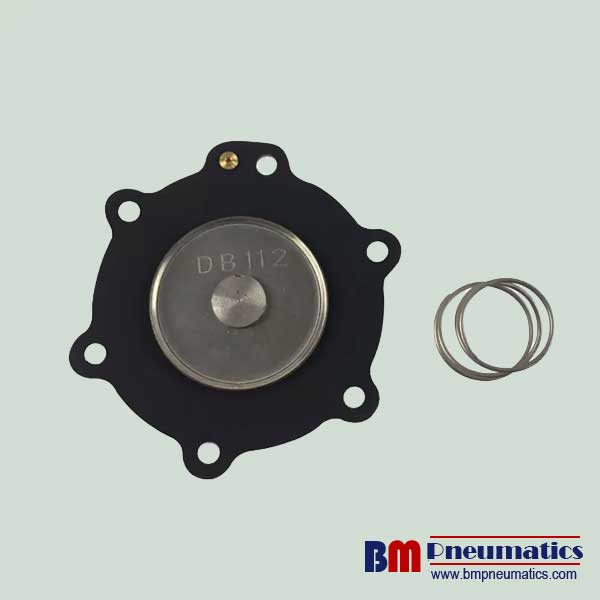
What Is a Mecair Pulse Valve Repair Kit?
A Mecair pulse valve repair kit is a set of replacement components used to restore the operating performance of a diaphragm pulse valve. Depending on the valve configuration, a kit can include one or more diaphragms together with springs and other related components.
Mecair diaphragm repair kits are available for different VEM and VNP valve configurations. Common kit references include DB16, DB18, DB112, DB114, DB116 and DB120, with the appropriate kit depending on the valve model and size.
The purpose of using a repair kit is straightforward: replace the worn internal components while retaining the existing valve body when it is still in good condition.
This approach can be particularly useful for dust collectors containing a large number of pulse valves because maintenance teams can repair individual valves without replacing complete assemblies unnecessarily.
Why Does a Mecair Pulse Valve Need a Repair Kit?
The diaphragm inside a pulse valve moves every time the dust collector performs a cleaning cycle. During each pulse, the pilot system changes the pressure balance across the diaphragm, allowing the main compressed-air flow to open rapidly and clean the filter.
After the pulse, the diaphragm must return to its sealing position. Repeated cycling, moisture, contamination, unsuitable compressed air and demanding operating conditions can gradually affect the diaphragm’s flexibility and sealing performance.
Once the diaphragm is no longer operating correctly, the pulse valve may consume more compressed air or fail to provide the cleaning energy required by the filtration system.
A repair kit provides a practical way to address this type of wear without automatically replacing the entire valve.
Common Signs of a Mecair Pulse Valve Diaphragm Failure
A worn diaphragm can produce several symptoms during normal dust collector operation. Some problems are obvious, while others first appear as a gradual decline in filter-cleaning performance.
Common symptoms include:
- Continuous compressed-air leakage
- Weak or incomplete cleaning pulses
- Valve remaining partially open
- Valve failing to close after a pulse
- Increased compressed-air consumption
- Abnormal valve noise
- Increasing filter differential pressure
- More frequent cleaning cycles
- Reduced dust collector cleaning efficiency
These symptoms should be investigated systematically because a diaphragm is not the only possible cause. Solenoid problems, pilot valve faults, insufficient air pressure, contaminated compressed air and controller issues can produce similar operating conditions.
Mecair Pulse Valve Diaphragm: The Main Wear Component
The diaphragm is the component that repeatedly moves between open and closed positions during pulse cleaning. Its flexibility, sealing performance and response characteristics therefore have a direct influence on valve operation.
When a diaphragm begins to deteriorate, it may become less responsive or fail to seal properly. In a severe case, the valve can leak continuously rather than delivering compressed air only during the programmed cleaning pulse.
For this reason, diaphragm condition should be included in preventive maintenance inspections, particularly on dust collectors that operate continuously or use a high pulse frequency.
Pentair Goyen Mecair recommends regular inspection of reverse pulse jet systems, with annual inspection given as a general minimum recommendation and more frequent inspection where operating conditions require it.
How to Identify the Correct Mecair Pulse Valve Repair Kit
Correct identification is the most important step when purchasing a Mecair diaphragm repair kit.
The same general valve size does not necessarily mean that two diaphragms are interchangeable. The valve series, model, diaphragm configuration and repair-kit reference should all be considered.
1. Identify the Valve Series
Mecair VEM and VNP are common valve families associated with diaphragm repair kits.
The valve model should be taken directly from the valve body, product documentation or existing maintenance records rather than estimated from appearance.
2. Confirm the Valve Model
The model number provides a much more reliable basis for kit selection than the pipe connection size alone.
For example, published repair-kit references associate DB114/C with various VEM/VNP 214, 314, 414 and related configurations, while DB116/C is used for certain 2-inch VEM/VNP configurations.
3. Confirm the Port Size
Port size is still important because different valve sizes require different diaphragm dimensions and configurations.
Common Mecair repair-kit references cover sizes ranging from smaller valves through larger dust collector pulse valves.
4. Check the Diaphragm Material
Material should be selected according to operating temperature, chemical exposure and other environmental conditions.
Nitrile is commonly used for general applications, while Viton and other material configurations may be available for more demanding operating conditions.
5. Check the Existing Kit or Diaphragm Code
If the existing component has a DB-series code, record it before ordering a replacement.
This is especially useful for older dust collectors because it allows the supplier to cross-reference the existing component against the installed valve.
Common Mecair Diaphragm Repair Kit Codes
Mecair repair-kit references are often identified using DB-series codes. These codes should be treated as identification references rather than as universal size descriptions.
For example, published product information associates:
- DB16 with certain smaller VEM/VNP configurations
- DB18 with selected 1-inch configurations
- DB112 with selected 1.5-inch configurations
- DB114 with other 1.5-inch configurations
- DB116 with selected 2-inch configurations
- DB120 with selected 2.5-inch configurations
The exact valve compatibility depends on the complete valve model, so a DB number should not be selected based solely on nominal pipe size.
This distinction is important when purchasing replacement parts because two repair kits can have similar application descriptions while being designed for different valve constructions.
Mecair VEM Diaphragm Kit
VEM valves are commonly encountered in industrial dust collection systems, and replacement diaphragm kits are available for different VEM configurations.
When ordering a Mecair VEM diaphragm kit, the VEM model number should be confirmed first. The valve size and existing diaphragm or repair-kit reference should then be checked against the replacement part.
For example, published compatibility information lists DB16, DB18, DB112, DB114 and DB116 kits against different VEM configurations, demonstrating why model matching is important.
Mecair VNP Diaphragm Kit
Mecair VNP valves also use dedicated diaphragm configurations, and repair-kit selection should follow the same identification process.
The VNP model should be recorded together with the valve size and existing repair-kit reference. This information can then be cross-referenced against the available diaphragm kit.
For larger VNP valves, some repair kits use more than one diaphragm or include additional components required for the valve configuration, so purchasing a generic replacement diaphragm without checking the valve model can create compatibility problems.
Mecair Diaphragm Material Selection
Material selection has a direct influence on diaphragm service life.
Nitrile Diaphragm
Nitrile, also referred to as NBR or Buna in some product descriptions, is commonly used for general industrial dust collection applications.
It can be a practical choice where the operating temperature and chemical conditions fall within the material’s suitable range.
Viton Diaphragm
Viton is used for applications where different temperature or chemical-resistance characteristics are required.
Mecair replacement-kit references include Viton configurations for several valve sizes, including VEM/VNP applications.
The material should be selected according to actual operating conditions rather than assuming that a more expensive material will automatically provide better performance.
Special Material Configurations
Some Mecair repair-kit listings also identify configurations involving different diaphragm or bleed-path materials for specific operating conditions. These should be selected only after confirming the requirements of the installed valve and application.
Mecair Repair Kit vs Individual Diaphragm
Whether to purchase an individual diaphragm or a complete repair kit depends on the condition of the valve.
If the diaphragm is the only worn component and the spring, sealing surfaces and other internal components are still serviceable, an individual replacement may be sufficient.
A complete repair kit is more appropriate when several internal components have accumulated wear or when the valve has been operating for an extended period. Published Mecair kit information indicates that diaphragm kits commonly include replacement diaphragm components together with springs for applicable valve configurations.
For planned maintenance, using a complete kit can also reduce the risk of replacing one component while leaving another worn component inside the valve.
How to Replace a Mecair Pulse Valve Diaphragm
The exact procedure depends on the valve design, so the applicable product documentation should always be followed. A typical maintenance process includes the following steps.
Isolate the Compressed-Air Supply
Shut off the compressed-air supply before opening the valve and release stored pressure from the system.
The electrical or pilot control system should also be isolated where necessary so that the valve cannot be actuated during maintenance.
Remove the Valve Cover
Remove the relevant valve cover or retaining components to access the diaphragm assembly.
Keep the components organized during disassembly because springs, diaphragms and retaining parts must be installed in the correct configuration.
Inspect the Diaphragm
Look for cracks, tears, deformation, hardening or other abnormal wear.
At the same time, inspect the spring, sealing surfaces and pilot components. If the valve body or seat is damaged, installing a new diaphragm alone may not restore reliable operation.
Clean the Internal Surfaces
Remove dust and other contamination from the sealing area.
Clean internal surfaces are important because even small particles trapped between the diaphragm and its seat can result in leakage after reassembly.
Install the New Diaphragm
Install the replacement diaphragm in the correct orientation and position.
If the repair kit contains more than one diaphragm or additional components, all parts should be installed according to the applicable valve configuration.
Avoid twisting, folding or mechanically damaging the diaphragm during installation.
Reassemble and Test
Reinstall the spring and cover components, then restore compressed-air pressure gradually.
Activate the valve and listen for a clean pulse response. Check the valve for continuous leakage after the pulse has finished.
Why Does a New Mecair Diaphragm Fail Quickly?
Premature diaphragm failure usually indicates that another operating condition needs attention.
Contaminated Compressed Air
Moisture, oil and solid particles can interfere with diaphragm movement and sealing surfaces. Clean, dry compressed air is therefore an important part of pulse valve maintenance.
Incorrect Repair Kit
A diaphragm that looks similar to the original may still have different dimensions or operating characteristics.
The valve model and existing kit code should be checked before installation.
Excessive Pulse Frequency
A dust collector operating with an unnecessarily high pulse frequency places additional cycling demand on the valve diaphragm.
If diaphragms are failing repeatedly, the cleaning sequence should be reviewed rather than simply replacing the same component.
Unsuitable Material
A diaphragm operating outside its suitable temperature or chemical range may deteriorate much faster than expected.
Damaged Sealing Surface
If the valve seat or another internal sealing surface is damaged, a new diaphragm may not seal correctly even when the replacement part itself is correct.
Compressed-Air Quality and Mecair Pulse Valve Life
Compressed-air quality is an important factor in pulse valve reliability.
Moisture can accumulate inside compressed-air lines, while oil and particulate contamination can affect valve components. These contaminants can interfere with diaphragm movement and increase wear.
The compressed-air system should therefore be inspected together with the pulse valve whenever repeated diaphragm failures occur.
A valve that receives clean, stable compressed air can operate more consistently than an identical valve exposed to contaminated or unstable air conditions.
When Should a Mecair Pulse Valve Repair Kit Be Replaced?
There is no single replacement interval that applies to every Mecair pulse valve.
Maintenance frequency depends on:
- Pulse frequency
- Operating temperature
- Compressed-air quality
- Dust concentration
- Corrosive gases
- Cleaning requirements
- Overall equipment duty cycle
Pentair Goyen Mecair recommends at least annual inspection and notes that maintenance frequency may need to increase depending on pulse frequency, corrosive gases, operating temperature, compressed-air quality and changes in cleaning demand.
Instead of waiting for complete valve failure, maintenance teams can monitor leakage, pulse performance and compressed-air consumption and schedule replacement based on actual equipment condition.
Mecair Pulse Valve Repair Kits for Dust Collector Applications
Mecair pulse valves and repair components are used in industrial dust collection systems across multiple industries.
Typical applications include:
- Cement production
- Mining
- Bulk-material handling
- Silo and conveyor systems
- General industrial dust collection
- Power generation
- Emission-control systems
Pentair Goyen Mecair identifies cement, mining, bulk handling, general industrial dust collection and power applications among the areas served by its reverse pulse jet valve aftermarket kits.
The actual diaphragm selection, however, should always be based on the installed valve and operating conditions rather than simply on the industry.
How to Order the Correct Mecair Pulse Valve Repair Kit
When requesting a quotation, provide enough information for the supplier to verify compatibility.
The following information is recommended:
- Mecair valve series
- Valve model
- VEM or VNP designation
- Valve port size
- Existing repair-kit code
- Diaphragm material
- Number of diaphragms
- Operating temperature
- Dust collector application
- Quantity required
- Photos of the valve and nameplate
For example, instead of requesting only a “Mecair 2-inch diaphragm,” provide the complete valve model and existing part number whenever possible.
This allows the supplier to cross-reference the valve against the appropriate repair kit and reduces the risk of receiving an incompatible component. Pentair Goyen Mecair also recommends using valve model information and compatibility references when identifying replacement kits.
FAQ About Mecair Pulse Valve Repair Kits
What is a Mecair pulse valve repair kit?
It is a set of replacement components used to restore the operating performance of a Mecair diaphragm pulse valve. Depending on the valve configuration, the kit can include diaphragms, springs and other related components.
What is the difference between a Mecair VEM and VNP diaphragm kit?
The correct kit depends on the installed valve model and configuration. VEM and VNP valves should not be treated as interchangeable simply because they have similar nominal sizes.
What are Mecair DB16, DB18, DB112 and DB114?
These are repair-kit reference codes used for different Mecair pulse valve configurations. The correct code depends on the valve model, size and diaphragm configuration.
Can I replace only the Mecair diaphragm?
Yes, if the remaining valve components are in good condition and a suitable replacement diaphragm is available. A complete repair kit may be more appropriate when several internal components have accumulated wear.
What material should I choose for a Mecair diaphragm?
Nitrile is commonly used for general applications, while Viton and other configurations may be appropriate for more demanding temperature or chemical conditions. Material selection should be based on the actual operating environment.
Why does my Mecair pulse valve leak after installing a new diaphragm?
Possible causes include incorrect diaphragm orientation, an incompatible repair kit, contamination on the sealing surface, a damaged valve seat, spring problems or pilot-system faults.
How often should Mecair pulse valves be inspected?
Pentair Goyen Mecair recommends at least annual inspection, with the maintenance interval adjusted according to the application’s pulse frequency, temperature, compressed-air quality and other operating conditions.
Conclusion
A Mecair pulse valve repair kit provides a practical way to restore a worn diaphragm pulse valve without automatically replacing the complete valve assembly. The most important part of the process is correct identification because Mecair VEM and VNP valves use different repair-kit configurations and DB-series references.
Before ordering a replacement, confirm the valve model, size, diaphragm configuration and material. If the valve body and other major components remain serviceable, replacing the diaphragm or using a complete repair kit can restore reliable pulse operation and help reduce unnecessary maintenance costs.
For dust collector operators, regular inspection, clean compressed air and correct replacement components are essential to maintaining consistent pulse performance and avoiding unexpected filtration-system downtime.